Showing posts with label George Bordewick. Show all posts

Bordewick Placeline

 Here's the second part of my family placeline, this time starting with my mom and working back from her. Her paternal line is Norwegian/Germanic, but the family as a whole has hit a block with my five times great grandfather, Hans Henrik, who came to Norway from Germany. Bardoweick, or so the family story says. But as of yet, no one in the great extended family has been able to find his family back in Germany.

Same note as before here: Bolded locations are ones where a major life event happened, either Birth, Marriage, or Death. Italicized locations are places where the family lived, but there were no big events in that person's life at that location.

1. My Mom: Ruth Anne Hillinger nee Bordewick

My mom's story is similar to my dad's. She was born outside the US, and came here with her parents. Unlike him, her parents weren't already citizens when she came here, but because she did come with her family, she met my dad, and the rest, as they say, is history.

A. Seattle, Washington. The place my mom lived for most of my life until she passed.

B. Port Orchard, Washington. Where mom and dad lived for a few years after my sister and I moved out before coming back to live in Seattle.

C. Bellevue, Washington. When my mom's family came to the US in 1960, they settled in Bellevue, where mom attended high school, and where she eventually married my dad.

D. Vancouver, BC. Where mom's family lived when she and her siblings were all born. Her family lived there until her father went looking for a better job, which lead them to moving to the US in 1960.

2. My Grandfather, George Robert Bordewick

My grandfather was the first generation on both sides of his family born in Canada, and all his children were born there as well. If he had not chosen to leave the country to find a better living, our family likely would have stayed there for at least another generation, if not more. But we did, so here we are.

A. Bellevue, Washington. Where my grandparents lived together through the remainder of their children's childhood, three marriages, and right until his death.

B. While serving in the war, Grandpa stayed mostly in the south west of England, and even went north to visit his in-laws' families when he had leave time. 

D. Truro, Nova Scotia. His training before he was sent overseas was here, and grandmum came to live here while he was here.

C. Vancouver, BC. Grandpa is another one of my family who really didn't move around much. He ws born in Vancouver and lived there with his parents until he married, went off to war, then settled down with his bride and their growing family after the war was over. I don't have strong details about grandpa's time in the army, but I may add more if I am able to find it.

3. Bjarne Bordewick, born Bordewich

A. Vancouver, BC. Where Bjarne finally settled with his parents after travelling halfway around the world from their home in Norway. Another of his mother's siblings lived here in Vancouver with her husband and their family. Here he met my great-grandmother, Mary. They married here and had two boys, George and Henry (aka Harry), and lived here until he died in a car accident near their new home in 1950.

B. Cleethorps, England. When things went bad in Belgium, the family moved here to be close to Bjarne's mom's younger brother, who I believe lived in Hull. Bjarne spent several years here, and was even starting his testing to go to Cambridge when his family moved again, this time to Canada. I believe he came separate from his family, but the records are a little scattered. It's possible I have records wrong, and he came with his family, but at this time, I do not have a record of all five family members together on a boat.

C. Antwerp, Belgium. When fishing in the Lofoten Islands became difficult, Bjarne's dad and his uncle Eivind tried to set up a fishing venture, sending their fish to markets where they could charge more for them. Unfortunately, Bordewich in Norway became Bordewick in Belgium, and the Belgians heard it as an English name. This was around the time of the Boer War, and feelings about English were at an all time low. The family still tells stories about the family being spit upon on the street. We don't think they even lasted a year here before they moved again.

D: Henningsvaer, Lofoten Islands, Norway. Bjarne was born in a small town south of the town his grandfather ran. He lived here until the family moved when he was young.

4. Henrik Bergithon Bordewick, aka Henry Bordewick, born Bordewich

A. Vancouver, BC. Where Henry lived with his wife and sons until his death in 1930, having moved from England in 1910.

B. Cleethorps, England. He lived here for several years with his family, becoming a UK citizen in 1910 before moving to Canada shortly after.

C. Antwerp, Belgium. Where he'd hoped to start a new business, which failed badly (see above for more details), causing the family to move again.

D. Henningsvaer, Lofoten Islands, Norway. Where he had his own small farm, and his three sons were born before fishing (which he and his brother used to supplement their family larder) became difficult, and he and his brother Eivind came up with an idea for how to make money from the fish they were able to catch.

E. Lingvaer, Lofoten Islands, Norway. Where he was born, and where his father was born before him. A small town his grandfather ran, first as the man in charge of the town trading post, but later also as mayor for a time.

5. Hans Henrik Bordewich

A. Henningsvaer, Lofoten Islands, Norway. When Hans's father Johan remarried, he decided to leave, since his father showed no signs of stepping aside so that his sons could take over his business. He and his wife moved to Henningsvaer, where his grandson was born, and where he passed away at the age of 59. 

B. Lingvaer, Lofoten Islands, Norway. I believe Hans Henrik lived his most of his life in the town he was born in. If not, he was one of the few of Johan's children not to be born there, but at the moment, my records are not concise enough for me to be certain.

6. Johan Petter Bordewich

A. Lingvaer, Lofoten Islands, Norway. Shortly after his first marriage, he moved to Lingvaer, and all of his sixteen children were born in Lingvaer, if what I believe is correct. He helped run a trading post there, and when his boss needed to leave (quite abruptly, from the family lore), he took over the post and ran it quite well for many years. He even became mayor of the town for a time. After his first wife's death, and a subsequent child by one of his family staff, he eventually married again, having four more children with his second wife. He died here at the age of 76, quite a good age for someone living back in 1879.

B. Trondheim, Norway. Johan was born here to a captain and his wife, and lived there until he was old enough to work. According to the family lore, he eventually began working in the Lofoten Islands for a man who ran a trading post there.

7. Hans Henrik Bordwig (or Bordvik, or many other variations)

A. Trondheim, Norway. Hans Henrik came to Norway and met and married his wife, Anna here. They had three sons, and he started up a shipping concern. He was captain of his own boat, and helped ship goods to many places in Europe before his ship ran aground on an island on the edge of the Lofoten Islands. It was winter, and while the men made it to shore, they all froze before they were found. 

B. Bardoweik, Germany. This is where we have been told that Hans was born, though as of yet, no one in the extended family has been able to find a record that precisely matches his information, so we have been unable to trace back further in his family line.

*

So there are all the locations for my Bordewick/Bordewich/Bordewig line. 11 locations. A very descent amount. The ones coming up next won't be quite as long, though they still extend back quite a ways, so we shall see.

Hometown Histories – Vancouver, BC – George Bordewick & Merle Jones


Both of my maternal grandparents were born in Vancouver, BC. Merle Tydfil Jones in 1915, and George Robert Bordewick in 1918.

Vancouver is a seaport on the west coast of mainland British Columbia, Canada. It is set on the mouth of the Frasier River. It currently encompasses a land area of around 114 square kilometres. In 1911, when my grandmother's parents married, the population was 164,020. By 1921, three years after my grandfather was born, it had risen to 232,597 people. By 1920, Vancouver replaced Winnipeg as the leading city in western Canada. As of 2011, the population was more than 2.3 million people. It is the most populous city in Western Canada.

The city is located in the areas that include the ancestral territories of the Squamish, Musqueam, and Tseil-Waututh peoples of the Coast Salish Native Tribes. They had villages in many parts of present-day Vancouver. The area is called S'ólh Téméxw by the First Nations of the area. The Musqueam have been living in the area for 4,000 years. The Squamish and Teleil-Waututh are much newer to the area, but living in the area by the time European mapping took place. The Musqueam and Squamish tribes still live in the area today.

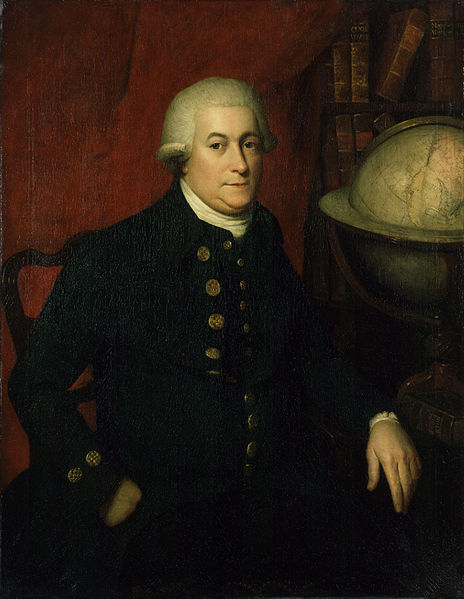
George Vancouver, NPG
The city's name was taken from one of the early explorers to the area, a naval Captain named George Vancouver. He explored the area in 1792. His was the second European scouting party to explore the area. The first was a Spanish Captain by the name Jose Maria Narvaez. Vancouver's party surveyed the Strait of Juan de Fuca, and they were there to map the entire west coast all the way up to Alaska. This work was accomplished in small oar and sail-propelled boats so that they could get into the smaller and shallower inlets without difficulty.

The major river of the area is the Fraser River, named for Simon Fraser, who was the first European to reach the area by land. He travelled to the area along the river now named for him, in 1808. The river became one of the leading routes for those who came into the area for the Frasier Canyon Gold Rush in the 1860s. It was not as successful as the San Francisco or Yukon Gold Rushes, but it brought many Europeans into the area. Because of the Gold Rush, the Province of British Columbia was formed from the unincorporated western area at the time.

The first non-native settlement in the Vancouver area was about 1862, in the Southlands area. The original main settlement, Gastown, was started on the west edge of the Hastings Logging Mill. It started with a tavern created by the millworkers in 1867, which was soon joined by other stores and hotels. Eventually it became a townsite that was named Granville, BI. Shortly after the railroad was started in the area, it was renamed Vancouver, and was incorporated as a City in 1886.

City of Vancouver, 1898
The railroad caused quick growth to the city, and provided easy travel to the eastern provinces of Canada. Immigration from eastern Canada and Europe increased greatly, and also many Chinese immigrants chose to settle there.

Vancouver's port quickly became significant as a link in Britain's global trade network. After the Panama Canal's completion in 1914, it became even more important. The city was then able to compete with the major international trade ports around the world, giving another alternate route to Europe from Asia.

This would have been the year before my Grandmother, Merle was born. Which means she grew up in a flourishing, global city. And it showed in the family she married into. Merle's parents, Daniel and Eliza Jones, had both come to Canada from Wales. Daniel in the nineteen-teens, and Eliza in the late 1800s. George, on the other hand, was born to a much more multi-cultural household. George's father, Bjarne, was from a Norwegian family who had immigrated from first Amsterdam, then settled for a time in Hull, England before immigrating to Vancouver, BC. His mother, Mary, was born in Philadelphia, PA to Irish immigrants. The family moved to Ireland for a year when Mary was in her late teens, then to the Vancouver area in the early nineteen-teens.

In 1919, the Canadian National Railway station was completed. My great grandfather Daniel worked for the Railway, even making a point of asking the railway workers along the way to look after his daughter when she went to join my grandfather while he was training in the east. It was named Pacific Central Station, and provided links down into the US to Seattle and Portland, and via those down to California, and also the most direct route across Canada.

Robert and Lizzie Park with friend, at Mary's wedding, 1911
British Columbia was the second-most populous state for Irish immigrants according to the 2006 Canadian Census. Many came to Canada during the potato famine in the mid-to-late 1800s. My grandfather's mother's family, the Parks, were northern Irish. They left before the country was partitioned. They were protestant, which was true of many northern Irish, and I think coming to the US was their way of trying to escape the growing tensions at home. When things became difficult in Philadelphia for Irish immigrants in the early 1900s, they returned to Ireland. It was only the fact that Vancouver was a growing mecca for many immigrant groups that drew them to the city; along with a letter from one of their children touting the beauty of the area. As citizens of the UK (at least, I believe they were at the time), they were automatically naturalized as Canadian citizens when they arrived. It made the move quite easy, despite being halfway around the world from home.

Gabriel Howells and family ca 1885
Welsh immigrants, on the other hand, are far more populous in Alberta and Saskatchewan, though they are all over Canada. My great-great grandparents, Gabriel and Selina Howells moved to Saskatchewan to live on Gabriel's brother's farm. They moved soon after, settling in Winnipeg, but their children soon began to move west, all settling in BC, and most in and around the city of Vancouver. My great-grandfather, Daniel, came to Canada from Wales as a young man for a trip with friends. Though he meant to come only for a visit, upon meeting my great-grandmother Eliza, he chose to stay, and only returned home to Wales for visits. Again, as citizens of the UK, Daniel, Eliza and her family were all automatically naturalized citizens of Canada.

My Norwegian roots are a little murkier to me, as I am uncertain whether my great-great grandparents, Henrik and Leonharde (Henry and Harde) Bordewick, became Naturalized UK citizens while they were living in Hull, England, or whether they did not become Commonwealth citizens until they settled in Vancouver. I do know that as a fisherman, the West coast provided a great opportunity for Henry, and the community here was very much the home they had been looking for over a number of years, after several stops from their original home in the Lofoten Islands.

McGill University College of British Columbia, the oldest university in BC, changed its name to the University of British Columbia the year my grandmother Merle was born. The population of the campus was greatly diminished by the call to arms during World War I. By the end of the war, almost 700 members of the university had enlisted. In 1920, two years later, the university had only three faculties: Arts, Applied Science, and Agriculture, and only awarded the degrees of Bachelor of Arts, Bachelor of Applied Science, or Bachelor of Science in Agriculture. At that time, there were 576 male students and 386 female students, with only 64 academic staff, only six of which were women. In 1922, the student body had risen to the number of more than twelve hundred, and they marched to push the local government into expanding the campus. Their cause was successful, and the campus was moved to Point Grey, with the first lectures there starting in 1925. Unfortunately, the depression had a bad effect on the campus, and their funds were cut drastically, to the point where many staff posts remained vacant, and several of the faculty lost their jobs. In addition, most graduate courses were dropped. Things were beginning to improve just as World War II broke out. At the close of the war, the numbers in the university increased dramatically, growing almost exponentially, and causing great expansion of both classes and campus.

In 1918, the year my grandfather George was born, the Vancouver General strike happened. It was the first general strike in Canadian history, protesting the killing of a draft dodger named Albert Goodwin. He had called for a general strike in the event any worker was drafted against their will. In response, a group of returned soldiers stormed the offices of the Vancouver Trades and Labour Council. They attacked the Council secretary, Victor Midgely and forced him and another man to kiss the union Jack. One of the women in the offices also received minor injuries when she prevented them from throwing Midgely from the window. The city's reaction against the strike was strong, and the leaders resigned due to the backlash. However, they were nearly all re-elected shortly after, showing that within the union their support had been strong, and not influenced by outside forces. Vancouver was the only city in BC that took part in the strike. Many other strikes also took place in the city that year. It was an important point in the Canadian labour revolt that peaked with the Winnipeg General strike the next year. Another Vancouver strike in sympathy with Winnipeg became the longest general strike in Canadian History.

George and Merle on their wedding day ca 1939 with his grandmothers Harde and Lizzie
This was the liberal, growing, thriving city my grandparents grew up in. Both grew up in protestant households, attending regular services on Sunday, and both got involved in youth groups in their churches. It was this that led to their meeting as teens, and the two quickly became an item, dating until the late 1930s, when George joined the Canadian Armed Forces. George asked Merle to marry him, and she said yes. The two were married at her parents' house in 1939, and then Merle and George headed for the east where George was trained. She stayed with him there until he was sent to the front, and then returned home, where she gave birth to the first of their four children.

He returned from the war and settled into civilian life, becoming an accountant. He and Merle had four children there together before George began to search for a new job in the late 50s. He eventually found the family a new home in Bellevue, Washington and they moved in 1960. However, even after their move, the family visited their fair home city quite often, and still do even today.

Sources:
Bordewick Family History

Wordless Wednesday


I never do wordless Wednesday, but I've been working on a slideshow for my grandmother's funeral service, and saw this, and yeah... (I know it's not wordless, but it's close)

Advent Calendar: George Bordewick

George Robert Bordewick

Born 1918, Died 1991, Aged 73
Lived in: Vancouver, BC; Bellevue, Washington
Married: Merle Jones
Children:
DE Bordewick
KE Bordewick
RA Bordewick
RH Bordewick

George Bordewick was the fist-born son of Bjarne and May Bordewick, born in 1918 in Vancouver BC. He and his younger brother grew up in Vancouver, and as a teenager, George became involved in a youth group where he met a girl named Merle. The two fell in love and spent many idyllic days together. When England entered World War II, George joined up, but before he left for Europe, in 1939, he and Merle married at her parent's home. He finished his training in Truro, Nova Scotia, Merle joining him there until he left for England. Their first child was born back in Vancouver while George was away at war. When George returned home, two more children followed. George took a job in accounting, and after the birth of their forth child, things began to be difficult for them in Canada, and so George set out to find a better job, eventually finding a job for the Brower Company in Washington, and the whole family moved across the border to settle in Bellevue, Washington in the early 1960s. After his retirement in the 70s, George spent more time fishing, a life-long hobby, and also working on marquetry pictures to pass the time. He also became more heavily involved in the Masonic Temple, eventually becoming Grandmaster, and leading the ceremony to set the cornerstone for the Tacoma Dome. Many Masonic programs still exist today in his honour. George and Merle traveled quite a bit until George fell ill with Cancer in the early 90s and died.

About this blog

This blog is maintained by two sisters who have had a life long interest in geneology.
Mika writes here mostly about our family (Hansen, Hillinger, Bordewick, Park, etc), and her search for more information.
Shannon mostly uses this space as a place to make the many stories written about and by her husband's family (Holly, Walker, Walpole, etc) available to the rest of the family, present and future.

Our blog is named Oh Spusch! mostly because Shannon is bad at naming things. The first post I put up includes a story about the time Walker's great grandfather took his whole family out to see a play and the littlest kept saying "Oh! Spusch!" No one ever figured out what she meant by that.