Showing posts with label Howells. Show all posts

52 Ancestors: Textile - Mom and the Howells line

I couldn't tell you how long I've been fully aware I was Welsh in descent. Possibly it's just something I've always known. My great-grandmother Nain (Eliza Jones) was very proudly Welsh, though she lived most of her life in Canada, and kept up correspondence with her cousins still back in Wales in the Welsh language. So it's something that's always been there for me.


However, when I started to dig into my family, in family documents and also some documents I've found online, I learned that this branch of my family, the Howells/Gabriel line, were from before my great-great grandfather's line, were known for their weaving. His father's profession is listed as weaver in Gabriel's birth record, among several others. He also owned a farm, so most records list him as a farmer, but family lore says that for generations, the Howells were known for their weaving. 

My presumption is that this weaving talent traces our line back to France and our Huguenot ancestors. Again, I have no proof of this except that I have read several pieces in an attempt to track down possible ways to identify this likely ancestor that mentions the Huguenot talent for weaving. 

This skill is something that even existed down to my mom. When she went to college, her degree was in textiles, and in weaving. Through my teen years, and even into my early adulthood, my mom had a full-sized loom in our house that she used for a time before it was finally given to family friends who could use it when she was no longer able. I still have strong memories of the notebook she made of different styles of weaving, and the effects they could give, and I remember her using that loom in my childhood, too. In particular, I remember a set of pillows she made with some of the woven cloth she'd made.

Short one this week, but an aspect of my family I'm very fond of. And someday, I hope to use this to prove our connection to the Huguenot heritage I have been told we have. Also, if any of my Gabriel or Howell cousins out there have done your DNA test, I'd love to hear if you got any proof that our line may have come from France. As of now, my Welsh DNA seems to be purely Welsh, so we may be too far descended from that ancestor for any of us to inherit it, but if anyone did get some, I'd love to hear about it.

52 Ancestors - Sisters: Bessie and Catherine Howells

I have a few sister pairs in my family tree, but I couldn't resist the chance to talk about my Nain and her younger sister for this one. I have been told that my great-grandmother was very close to her younger sister, Catherine. They were born three years apart, and were two of the three youngest children of their family. Truly, I do not know much about their life or their friendship, only that Nain was very close to her sister.

I do know of a trip I believe they took together down to Seattle to the Alaskan Yukon Gold Rush Exposition. We have lots of shots of that trip, which was a long way to come in those days. We even have a few pictures of my great grandmother here in Seattle, which I have always been fond of once I found them.

As married women, they both lived in Vancouver, BC, and I imagine they likely spent a good deal of time together with their young children, though I imagine that got more difficult as they grew older. Nain had three girls before her sister had her first child, and her sister had only boys, though when my great uncle was born in the early 20s, I'm sure their children had fun playing together.

I wish I knew more about Catherine's life, because the records I find show that by the end of it, she was likely a very unhappy woman. I found a record of a daughter who died in infancy, and she had a series of at least five quick pregnancies in a row. It's a hard thing on a woman's body, just having one child. And to lose a child, and continue to have more so quickly, I'm sure had a detrimental effect on her mental health. The only reason I think this is because in 1937, she was sent to Essondale. In Vancouver, saying the name Essondale is equivalent to saying Bellevue in the US. It was an asylum. And not the good kind. I won't go into details here, but it was finally closed down in 1983, after a long history of some of the worst kinds of offences against mental patients. 

Catherine was not there long. Apparently she had a major depressive episode. She was there less than a month. The death certificate I have doesn't give details, only a statement that she died of "Exhaustion of Manic-Depressive Psychosis." I can only imagine what was truly wrong. Possibly the effects of untreated postpartum depression. Women's issues simply weren't given the right attention in those days. I try not to be angry at her husband for the fact that she ended up there. I don't know enough of their marriage to know if they were happy or not. All I know is that my great-great aunt was only 45 when she died, leaving behind at least two living sons, possibly as many as four, according to the records I have found.

It makes me sad, knowing that my Nain lost her sister this way, given how close she felt to her. I wish I'd known about her, and gotten to talk to Nain about her. I would have loved to hear her stories about her little sister, and their happy times together. 

52 Ancestors: Worship - The Huguenots

Upon seeing the prompt for this week, I struggled to decide what to write. Two things immediately came to mind. The first was my grandfather's line. My grandfather was born Jewish, and one of his grandfathers was a Rabbi--in the old country, possibly? I'm not entirely certain. But I talk about that side of my tree a lot, and so I think today I will focus on another group of people whose religion was used against them.

Before I begin, I have to say this is an unproven story I learned from my family. That one of my Welsh lines had connections to the Huguenots. I looked into it, googling the terms Welsh and Huguenot, and came across an article (which I have since lost) stating that there was a small group of Huguenots who settled in Wales and became known for their weaving. Which is what led me to believe that my Gabriels/Howells line was the one that was likely of Huguenot descent, as I knew that line had been weavers to a certain point. But I have also learned that proving Huguenot descent is not an easy thing, unless you manage to connect them to one of the Huguenots on different lists. Which I have yet to do. But I keep trying.

So for those who don't know who the Huguenots are, I'll offer a highly simplistic explanation. They were a group of protestants in Catholic France in the 16th and 17th centuries. The Catholic Church felt threatened by this group, leading to over a century of violence against Huguenots. Finally the Church convinced the French king to make any Protestant faith illegal. Huguenots had been fleeing the country for generations, and this was the final blow, causing those who could to flee the country.

If my family story is correct, it means we have some French ancestry. I don't know when our branch would have fled France, or whether the Welsh Huguenot weavers were actually my weavers, but I do know that my great-great grandfather's family were known for their weaving skill. For generations, it was how they made their money. I'm not entirely sure when that stopped being part of my direct line, though as technology advanced, people with those skills were replaced by factory-made cloth, so probably sometime about the beginning of the industrial revolution.

So here's the line as I have it, working back in time:

  • My great-grandmother was Eliza (known as Bessie) Howells who was born in southern Wales in 1885 
  • Her father was Gabriel Howells, born in northern Wales in 1849
  • His father was Howell Gabriel, born in northern Wales in 1822
  • His father was Gabriel Howel, born in northern Wales in 1794
Beyond this point, between myself and the extended Gabriel/Howells clan online who have been tracing their family tree, we do have two more generations back:
  • Gabriel Howel's father we now have listed as having been born in 1766 in northern Wales
  • And his father was Howel Gabriel, born in 1740.
I don't have a birth location for that last Howel, but it's still at least 60 years after the Huguenots fled France, so still well after the person who would have come from France. That means that if this is my Huguenot line, that they'd been in Wales for at least three generations by the time that Howel was born.

For me, the real curiosity of this family line is the naming tradition. While Wales is a patronymic country, meaning that children take on their father's name as their surname, that is not quite what my family did. For generations, the eldest son took on his father's name as his surname--but his siblings used their father's surname as their surname. It leads me to wonder if maybe this special naming tradition of switching back and forth between Gabriel and Howel as surnames has something to do with our Huguenot heritage. I have no proof of this, though, just a supposition. If anyone knows of a tradition like this, I'd love to hear about it.

52 Ancestors - Favorite Photo - Gabriel & Selina's 50th Anniversary


This photo is of Gabriel and Selina Howells' 50th Anniversary, they were my great great grandparents. The event was held in Vancouver, BC. They're the lovely elder couple in the center of the shot, with their children behind them and their grandchildren around them. The little girl in the front left is my grandmother, Merle, who would have been about eight or so at the time. Her older sisters are the two in the front right, and her little brother is the one on Selina's lap, I believe. Her parents are in the back right. He's the last in the back, and she's the second woman from the right. Most of their family lived in the area, but one branch did drive all the way up from California to attend.

Gabriel and Selina were married in Northern Wales in 1874. He was the eldest of his family, and was meant to be the one to inherit his family farm, but he wanted to go into masonry, and so after a horrible influenza outbreak where they lost their first two children, they chose to leave the area and move south to a mining town where they had six more children. Two boys and four girls. He worked on the mines, creating the masonry that held up the entrances and probably buildings of the mines, until he realized that working on the mine in that way was no more healthy than actually working in the mine. So the family moved again--this time across the sea to Canada. They settled for a time with Gabriel's brother, Louis and his family in Saskatchewan. But Louis had a farm, and Gabriel wasn't interested in being a farmer, so the family soon moved to Winnapeg, where he could do his masonry again. When their children began to move out and marry, each couple traveled west, all but one generally settling in and around Vancouver BC. Gabriel and Selina followed them west to be near their children, and settled there, living there until their deaths. Hers in 1933, and his in 1934, almost ten years after their 50th anniversary.

This photo has given me a wealth of knowledge about this branch of the family. I used to go over it with my grandmother for hours, gaining so many stories about her cousins and aunts and uncles on this side of the family. If you have similar photos, and grandparents they're connected to still around, I highly recommend it. You never know what you might learn.

Visual Family Tree IV - The Jones & Howells family

Here is the Welsh branch of my family tree.

Daniel & Eliza's 50th with their three daughters, Marjorie, Merle, & Edwina, 1961

 
Nain with her three eldest grandchildren, ca 1943

Merle Jones ca 1939

Merle, Eliza, Marjorie, Edwina, ca 1930s

Eliza Jones ca 1930s

Jones kids, ca 1925
Edwina, Marjorie, Merle
Ivor

Gabriel & Selina's 50th Anniversary, ca 1924

Daniel & Eliza with their eldest two daughters, Marjorie & Edwina, ca  1914

Daniel Jones, date unknown

Eliza Howells, ca 1900?

 Hannah & Benjamin Jones and their two daughters, May & Sophia, ca 1915

Howells family ca 1885
Back - Selina, Selina, Gabriel
Front - Eliza, Gwen, Hugh

Hugh & Ellen Roberts with Eliza Howells, ca 1886

And that's the lot! If you have any photos you think should be added, feel free to send them my way, or post them below. :)

Happy Mother's Day!

Seeing everyone else's posts this morning inspired me, so I had to make a post. I'm very pleased to say that we have a ton of great photos in our family, both because my grandfather was a shutterbug and because we have a lot of photos from back in the old country. We even have lots of photos showing four generations of different branches of my family tree. Including one of my direct maternal line.

My mother, my baby sister, my mom's mother Merle, her mother Eliza, and me ca 1976.
In fact, from my sister's daughter back, we have a nice long line of photos, which ends with our furthest-back known female ancestor on that side.

Ellen and Hugh Roberts with my great-grandmother, I believe. They were her grandparents, which makes Ellen my third-great grandmother.

Hugh and Ellen's daughter Selina with her husband Gabriel Howells and four of their six children. My great-grandmother is sitting on her mother's lap. Selina is my second-great grandmother.
Their daughter, Eliza Howells, who went by Bessie, my great-grandmother.
Her daughter Merle Jones, my grandmother.
Me and Mom at Hood Canal ca 1970 or 1971.
My sister ca late 90s.
My niece.
With my niece, that makes seven generations. Not bad.

Happy mother's day out there to all the moms reading this. Especially to my mom. Love you.

Hometown Histories – Vancouver, BC – George Bordewick & Merle Jones


Both of my maternal grandparents were born in Vancouver, BC. Merle Tydfil Jones in 1915, and George Robert Bordewick in 1918.

Vancouver is a seaport on the west coast of mainland British Columbia, Canada. It is set on the mouth of the Frasier River. It currently encompasses a land area of around 114 square kilometres. In 1911, when my grandmother's parents married, the population was 164,020. By 1921, three years after my grandfather was born, it had risen to 232,597 people. By 1920, Vancouver replaced Winnipeg as the leading city in western Canada. As of 2011, the population was more than 2.3 million people. It is the most populous city in Western Canada.

The city is located in the areas that include the ancestral territories of the Squamish, Musqueam, and Tseil-Waututh peoples of the Coast Salish Native Tribes. They had villages in many parts of present-day Vancouver. The area is called S'ólh Téméxw by the First Nations of the area. The Musqueam have been living in the area for 4,000 years. The Squamish and Teleil-Waututh are much newer to the area, but living in the area by the time European mapping took place. The Musqueam and Squamish tribes still live in the area today.

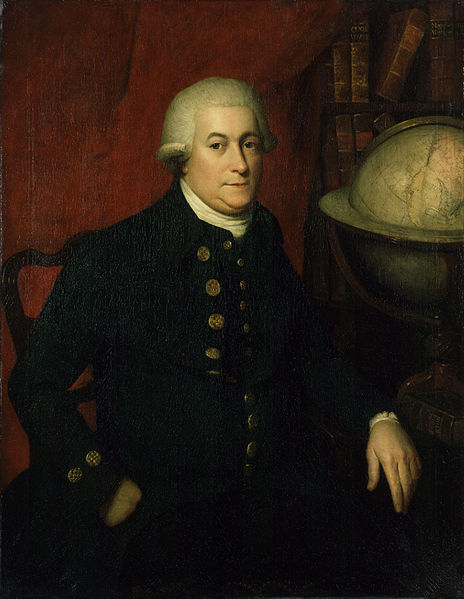
George Vancouver, NPG
The city's name was taken from one of the early explorers to the area, a naval Captain named George Vancouver. He explored the area in 1792. His was the second European scouting party to explore the area. The first was a Spanish Captain by the name Jose Maria Narvaez. Vancouver's party surveyed the Strait of Juan de Fuca, and they were there to map the entire west coast all the way up to Alaska. This work was accomplished in small oar and sail-propelled boats so that they could get into the smaller and shallower inlets without difficulty.

The major river of the area is the Fraser River, named for Simon Fraser, who was the first European to reach the area by land. He travelled to the area along the river now named for him, in 1808. The river became one of the leading routes for those who came into the area for the Frasier Canyon Gold Rush in the 1860s. It was not as successful as the San Francisco or Yukon Gold Rushes, but it brought many Europeans into the area. Because of the Gold Rush, the Province of British Columbia was formed from the unincorporated western area at the time.

The first non-native settlement in the Vancouver area was about 1862, in the Southlands area. The original main settlement, Gastown, was started on the west edge of the Hastings Logging Mill. It started with a tavern created by the millworkers in 1867, which was soon joined by other stores and hotels. Eventually it became a townsite that was named Granville, BI. Shortly after the railroad was started in the area, it was renamed Vancouver, and was incorporated as a City in 1886.

City of Vancouver, 1898
The railroad caused quick growth to the city, and provided easy travel to the eastern provinces of Canada. Immigration from eastern Canada and Europe increased greatly, and also many Chinese immigrants chose to settle there.

Vancouver's port quickly became significant as a link in Britain's global trade network. After the Panama Canal's completion in 1914, it became even more important. The city was then able to compete with the major international trade ports around the world, giving another alternate route to Europe from Asia.

This would have been the year before my Grandmother, Merle was born. Which means she grew up in a flourishing, global city. And it showed in the family she married into. Merle's parents, Daniel and Eliza Jones, had both come to Canada from Wales. Daniel in the nineteen-teens, and Eliza in the late 1800s. George, on the other hand, was born to a much more multi-cultural household. George's father, Bjarne, was from a Norwegian family who had immigrated from first Amsterdam, then settled for a time in Hull, England before immigrating to Vancouver, BC. His mother, Mary, was born in Philadelphia, PA to Irish immigrants. The family moved to Ireland for a year when Mary was in her late teens, then to the Vancouver area in the early nineteen-teens.

In 1919, the Canadian National Railway station was completed. My great grandfather Daniel worked for the Railway, even making a point of asking the railway workers along the way to look after his daughter when she went to join my grandfather while he was training in the east. It was named Pacific Central Station, and provided links down into the US to Seattle and Portland, and via those down to California, and also the most direct route across Canada.

Robert and Lizzie Park with friend, at Mary's wedding, 1911
British Columbia was the second-most populous state for Irish immigrants according to the 2006 Canadian Census. Many came to Canada during the potato famine in the mid-to-late 1800s. My grandfather's mother's family, the Parks, were northern Irish. They left before the country was partitioned. They were protestant, which was true of many northern Irish, and I think coming to the US was their way of trying to escape the growing tensions at home. When things became difficult in Philadelphia for Irish immigrants in the early 1900s, they returned to Ireland. It was only the fact that Vancouver was a growing mecca for many immigrant groups that drew them to the city; along with a letter from one of their children touting the beauty of the area. As citizens of the UK (at least, I believe they were at the time), they were automatically naturalized as Canadian citizens when they arrived. It made the move quite easy, despite being halfway around the world from home.

Gabriel Howells and family ca 1885
Welsh immigrants, on the other hand, are far more populous in Alberta and Saskatchewan, though they are all over Canada. My great-great grandparents, Gabriel and Selina Howells moved to Saskatchewan to live on Gabriel's brother's farm. They moved soon after, settling in Winnipeg, but their children soon began to move west, all settling in BC, and most in and around the city of Vancouver. My great-grandfather, Daniel, came to Canada from Wales as a young man for a trip with friends. Though he meant to come only for a visit, upon meeting my great-grandmother Eliza, he chose to stay, and only returned home to Wales for visits. Again, as citizens of the UK, Daniel, Eliza and her family were all automatically naturalized citizens of Canada.

My Norwegian roots are a little murkier to me, as I am uncertain whether my great-great grandparents, Henrik and Leonharde (Henry and Harde) Bordewick, became Naturalized UK citizens while they were living in Hull, England, or whether they did not become Commonwealth citizens until they settled in Vancouver. I do know that as a fisherman, the West coast provided a great opportunity for Henry, and the community here was very much the home they had been looking for over a number of years, after several stops from their original home in the Lofoten Islands.

McGill University College of British Columbia, the oldest university in BC, changed its name to the University of British Columbia the year my grandmother Merle was born. The population of the campus was greatly diminished by the call to arms during World War I. By the end of the war, almost 700 members of the university had enlisted. In 1920, two years later, the university had only three faculties: Arts, Applied Science, and Agriculture, and only awarded the degrees of Bachelor of Arts, Bachelor of Applied Science, or Bachelor of Science in Agriculture. At that time, there were 576 male students and 386 female students, with only 64 academic staff, only six of which were women. In 1922, the student body had risen to the number of more than twelve hundred, and they marched to push the local government into expanding the campus. Their cause was successful, and the campus was moved to Point Grey, with the first lectures there starting in 1925. Unfortunately, the depression had a bad effect on the campus, and their funds were cut drastically, to the point where many staff posts remained vacant, and several of the faculty lost their jobs. In addition, most graduate courses were dropped. Things were beginning to improve just as World War II broke out. At the close of the war, the numbers in the university increased dramatically, growing almost exponentially, and causing great expansion of both classes and campus.

In 1918, the year my grandfather George was born, the Vancouver General strike happened. It was the first general strike in Canadian history, protesting the killing of a draft dodger named Albert Goodwin. He had called for a general strike in the event any worker was drafted against their will. In response, a group of returned soldiers stormed the offices of the Vancouver Trades and Labour Council. They attacked the Council secretary, Victor Midgely and forced him and another man to kiss the union Jack. One of the women in the offices also received minor injuries when she prevented them from throwing Midgely from the window. The city's reaction against the strike was strong, and the leaders resigned due to the backlash. However, they were nearly all re-elected shortly after, showing that within the union their support had been strong, and not influenced by outside forces. Vancouver was the only city in BC that took part in the strike. Many other strikes also took place in the city that year. It was an important point in the Canadian labour revolt that peaked with the Winnipeg General strike the next year. Another Vancouver strike in sympathy with Winnipeg became the longest general strike in Canadian History.

George and Merle on their wedding day ca 1939 with his grandmothers Harde and Lizzie
This was the liberal, growing, thriving city my grandparents grew up in. Both grew up in protestant households, attending regular services on Sunday, and both got involved in youth groups in their churches. It was this that led to their meeting as teens, and the two quickly became an item, dating until the late 1930s, when George joined the Canadian Armed Forces. George asked Merle to marry him, and she said yes. The two were married at her parents' house in 1939, and then Merle and George headed for the east where George was trained. She stayed with him there until he was sent to the front, and then returned home, where she gave birth to the first of their four children.

He returned from the war and settled into civilian life, becoming an accountant. He and Merle had four children there together before George began to search for a new job in the late 50s. He eventually found the family a new home in Bellevue, Washington and they moved in 1960. However, even after their move, the family visited their fair home city quite often, and still do even today.

Sources:
Bordewick Family History

Saturday Night Genealogy Fun: My Family in 16 May 1865


For this week's mission (should you decide to accept it), I challenge you to:

1)  Determine where your ancestral families were on 16 May 1865 - 150 years ago.

2)  List your ancestors, their family members, their birth and death years, and their residence location (as close as possible).  Do you have a photograph of their residence from about that time, and does the residence still exist?

3)  Tell us all about it in your own blog post, in a comment to this post, or in a Facebook Status or Google+ Stream post.

My family on May 17, 1865:

This would have been my great-great grandparents and their parents in most cases. I've detailed as much as I know. Feel free to fill in details if you have them and would like to contribute.

Leon Seneft may have been born or not, but given that his wife was born about 1851, it seems likely he was. However, I know nothing about his childhood, his parents, or even where he was born. I suspect he may have been born in Galicia, as that is where his children were born.

Mindel Hilinger was born about 1851, so she would have been 14 or thereabouts. But like Leon, I have no information before her children were born, so I don't even know where she was born, let alone how many siblings she had or the names of her parents. We'll just call these two "Eastern Europe" for now, and leave it at that.

Like the Senefts, I have little on Benzion Kresch aside from a location and general date of death. His wife was born in about 1870, so it is possible he wasn't even alive yet. If he was, I'd venture to say he lived somewhere in Northern Galicia, possibly in or around Resezow.

Jens Christian Hansen was born in 1858 in Vejle, Denmark, which would have made him about 7 years old. His parents, Hans Knudsen (born 1824) and Christine Jensdatter (born 1834) would have been 41 and 31 respectively. I believe they had a farm in Vejle, and lived there with their children. At the time, there would have been three: Jens, Ane Marie (born 1860), and Karen (born April 1865). His paternal grandparents Knud Knudsen (born 1794, died 1866) and Ane Marie Hansdatter (born 1797, died 1876) and his maternal grandparents Jens Christian Pedersen (born 1798, died 1876) and Mette Matisdatter (born 1804, died 1898) were also still alive at that time. Knud would have been 73 and Ane Marie 70. Jens would have been 69, and Mette would have been 61. Both sets of grandparents also lived in Vejle. I believe all of the rest of the previous generation were gone by that point, though I could be wrong, as I do not have all the death dates for that generation.

Else Larsen was not alive yet, as she was born in October of that year, but her parents, Jorgen Larsen (born 1837) and Ivare Kirstine Christiensen (born 1845) had just married two years before in 1863. In 1865, Jorgen would have been 28, and Kirstine 20. They also lived in Vejle, Denmark. At this time, I do not have death dates for Jorgen's parents, so they may or may not have been alive at the time. Lars Andersen was born in 1794, which would have made him 73, and Birthe Marie Sorensen was born in 1798, which would have made her 69. If alive, they would also have been living in Vejle. Kirstine's parents, Kresten Hansen (born 1809, died 1890) and Else Katrine Ivarsdatter (born 1815, died 1893) were definitely alive at that time. Kresten would have been 56, and Else only 50. I do not have a complete listing of their children, but it seems the other daughter I do have listed for them, Katrine, was born about this time. And even if I am wrong, it is likely their younger children would still have been living at home. The Hansens also lived in Vejle. I only have one death date for the previous generation, which is well before 1865, so I will assume most or all of the ones I have names for were gone.

Rasmus Hansen was born in Soro, Denmark in 1845, which would have made him 20. He had a farm there he inherited from his parents, which I am certain he was living on at the time. I do not believe he had inherited it yet, however. His parents, Hans Nielsen and Maren Rasmusdatter would also have been living on the farm at the time. Hans was born in 1816, and so would have been only 49. Maren was born in 1817, so she would have been 48. Of the children I have listed for them, two were older than Rasmus, but I do not have records for either of them after 1860, so I am uncertain if they were alive at the time. I also have records for three younger children, but again, nothing after 1860, so I am uncertain if any were alive or not. Hans' parents were both gone more than ten years by this time. I have no record of Maren's parents at all.

Maren Sofie Olsen was born 1855 in Soro, Denmark. She would have been almost 10 years old in May of 1865. Her father Ole Larsen was born in 1812, which would have made him 53 or so. According to the family story, Ole left Denmark around the time Maren was born and came to America, settling in Minnesota with his brother Oscar. If that is true, at this time, he would have been living in Minnesota, though I do not have evidence yet to back this up beyond the family stories I have gathered. His wife, Birthe Marie Schroder (born 1819) would have been 46. He left her behind and never sent for her, so she and her daughter (or daughters—she had two from a previous marriage, though I am uncertain if they were alive at this time) remained in Denmark, struggling to make ends meet. I have no information on his parents, and no death date for her father, but her mother had been dead for more than thirty years by this time.

Henrik Bergithon Bordewich was born 1862 in Nordland, Norway, so he would have just turned 3 in February of that year. He was his parent's second child, and one of two living children at that time. His parents, Hans Henrik Bordewich (born 1834) and Karen Dorothea Angell (born 1835) would have been 31 and 30 respectively. Hans's father, Johan Petter Bordewich (born 1802) was still alive at that time, and would have been 63, living with his second wife, Henrikke (who we will get to in a bit here…). His first wife had died almost 20 years before. Karen's father had also been dead about 20 years, but her mother, Rechardina Hendricha Klaeboe (born 1795) was still alive, and would have been 71.

Leonharde Marie Bordewich was born in 1861, also in Nordland, Norway, so she would have been 4. Her father was Johan Petter (the same as Henrik's grandfather), her mother was his second wife, Pauline Henrikke Roness (born 1828). She would have been 37 years old. Three of their four children would still have been living in the household with them: Ida Amalie Bernhardine (born 1858), Leonharde, and Anna Magdalena (born 1862). Their youngest was not born for another two years. The whole Bordewich family lived in the Lofoten Islands in Norway. Johan's parents were both gone by this time, and I do not have dates of death for Henrikke's parents. Henrik Hansen was born in 1793, which would have made him 73, and Susanne Pedersdatter was born in 1787, which would have made her 79. I believe they lived in So-Trondelag, Norway, or would have if they were still alive.

Robert James Park was born in 1851 in Antrum, Ireland. He would have been almost 14 in 1865. I have almost no information on his family, but it's likely one or both of his parents, John Park and a Miss Dunlop (I still suspect her name was Mary) were alive at that time. I do not know when they were born, or where, or when or where they died. Nor do I know how many other children they had.

Elizabeth Curran was born in Antrum, Ireland in mid 1862, so she would not have even been 3 at that time. She was the eldest of her siblings, and was about to become a big sister in fall of that year. Her parents, Thomas Curran (born 1840) and Jennie Blair (born 1838) were 25 and 27 respectively. From the few records I have been able to gather, Thomas's father, Francis Curran (born 1814) was also still alive at that time, and living in Antrum as well. He would have been 51. I have no information on his wife, or their other children at this time. And I do not have enough information on Jennie's father, John Blair, to determine if he was alive or his age at that time, and absolutely no information on the rest of her family at all. All of the family seems to have been born or lived in Antrim.

Benjamin Jones was born about 1837 in Southern Wales. He would have been about 28. The earliest record I have found for him is a 1871 Welsh Census with his brother Joseph, who was 13 years younger than him, and their mother, Mary, who was 58 in that Census, and therefore would have been 52 in 1865. I am uncertain where they would have been living in 1865 aside from saying Southern Wales.

Hannah Griffiths was born in 1849 in Southern Wales. She would have been 16 or so in 1865. I have absolutely no information on her parents or siblings.

Gabriel Howells was born in 1849 in Northern Wales, so he would have been almost 16 at that time. His parents, Howell Gabriel (born 1822) and Catherine Jones (born 1825) would have been 43 and 40 respectively. They had six or seven children at the time: Gabriel, Evan (born 1854), Edward (born 1856), Lewis (born 1859), Catherine (born 1862), and Hugh (born 1864). Howell (listed as born 1865) may also have been born at this time, and one more was born after as well. The family lived in a farm in Dolgelly Wales, that was later inherited by Edward, I believe. For Gabriel's grandparents, I have only spotty information. His grandfathers are both listed as deceased by this time, but I have no birth death dates for either Gwen Evan, or Catherine Evans, so they might have been alive.

Selina Roberts was born in 1846 in Northern Wales, so she would have been just shy of 19. Her parents' names were Hugh Roberts and Ellen Pugh (or possibly Griffiths) I have no information on her parents' birth or death dates, but I do know they survived long enough to meet at least one of her children, as I have a shot of them with one, so they were likely alive at this time as well.

As you can see, my family was pretty spread out at this time. Ireland, Wales, Denmark, Norway, Eastern Europe, and even America. Of my great-great grandparents that I know exist, all but one were born by this time, which makes 15 ancestors alive.  Of the parents I know for those ancestors, I have record of another 21 living. And a possible 15 more the generation before that. For a total of 51 known ancestors living at that time.

About this blog

This blog is maintained by two sisters who have had a life long interest in geneology.
Mika writes here mostly about our family (Hansen, Hillinger, Bordewick, Park, etc), and her search for more information.
Shannon mostly uses this space as a place to make the many stories written about and by her husband's family (Holly, Walker, Walpole, etc) available to the rest of the family, present and future.

Our blog is named Oh Spusch! mostly because Shannon is bad at naming things. The first post I put up includes a story about the time Walker's great grandfather took his whole family out to see a play and the littlest kept saying "Oh! Spusch!" No one ever figured out what she meant by that.