Surname Sunday 3.0 - Bordewick and variants

The Bordewick name is the most fractured name in my family tree. I have several spellings to it, including my mother's maiden name, which is the one I use to label all my posts about this branch of the tree. The name originated likely in Germany, though we have not been able to find more than that it was based on the town the progenitor of our family line came from Bardowick, Germany. A short listing of the variants: Bordvig, Bordwig, Bardevich, Bordweich, and of course, Bordwick. These are the ones I will focus on in this post, though I could go much further, if I wanted to be all inclusive for this name. Suffice to say, five is plenty.

Bordewick:

According to Forbears, the name Bordewick is held by 336 people in the world. The largest number of which live in The US. Germany is the second most populous, which is where we believe our line comes from, and Norway and Canada which also figure strongly in our family story, are third and fourth respectively. 

Here's the distribution of the Bordewick name throughout the world. The darker the color, the bigger the representation of the name:


Here is the distribution in the US, where we currently live:

As you can see, the name spelled that way is the most prevalent in Illinois, and not in Washington where we currently live.

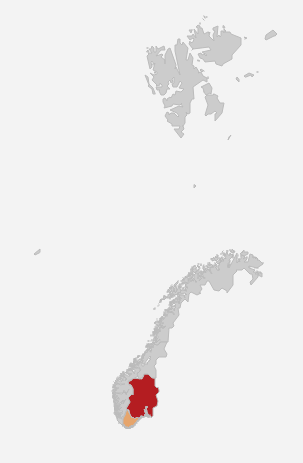
And here is the name distribution in Norway, where my great-grandfather was born:


This doesn't even show where he was born highlighted as all, likely because his grandfather spelled his name Bordewich, which is our next set of maps.

Bordewich:

Forebears says that there are currently 74 people in the world with this spelling of the surname, which surprises me. I thought it was the more common spelling of the surname, but maybe I am wrong? Again, it lists the US as having the most Bordewichs, followed by Norway. There are even two in England, and surprisingly to me, one in the Philippines. 

Here's the world map for Bordewich:

And here's the map for the US, showing Minnesota as the most populous state (not a shock at all, really):


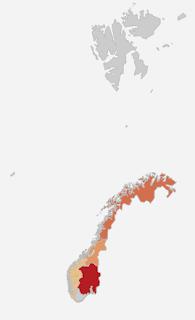
And Norway, which does show Northern Norway as a secondary population center for the spelling, which is where my great-grandfather was born:

Bordvig:

There are two other spellings of this surname, as I have listed above, but this is the last I will cover, as Bordwig and Bardevich do not show on Forebears at all. Bordvig has a tiny showing on the site, listing only 2 people currently using the spelling of the name in the world, both in Norway. 

Here's the map showing world placement:

And Norway:

I know that for our family, the surname solidified to Bordewich with my great-great grandfather Johan Petter, who spelled his name with the ch, and once more when my branch of the family moved out of Norway, possibly when they moved to England, where it became listed as Bordewick. I'm not entirely sure what my progenitor was born with at all, nor how he spelled his surname, but hopefully someday one of our line will find papers with his signature and preference for name on them. Until then, I can only speculate.

52 Ancestors: Food and Drink - Henrik Bergithon Bordewick

So I struggled a little with this one, and thought I needed to do this about the Jones branch, then realized I didn't have anything planned this month for the Parks or Bordewicks, and this thought came to me. It's perfect, so I had to go with it.

My grandfather owned a fishing boat for much of my early childhood, and used to go fishing and bring home salmon for the family to eat at our gatherings together. It's a past-time he inherited from his father, who inherited it from his. The Bordewick clan originally came from the Lafoten Islands in Norway. One of the commercial industries there is fishing. But when my great-grandfather was young, the fishing dried up for a time. Less of a haul for those making a living off the fish. So my great-great grandfather Henrik and his brother Eivind (I believe) decided to try to make more money off the small amount of fish they could catch by setting up a concern outside of Norway. Eivind chose to stay in Norway to do the fishing, while my great-great grandfather and his family left to head to Belgium in an attempt to set up business there.

So my family left Norway, along with a few girls to help my great-great grandmother around the house, one of whom was her elder sister's daughter. I'm not sure if the other two were related to the family or not, but I have determined that much, at least. Unfortunately, this was about the same time as the Boer war, and unfortunately, the Belgians saw the family name, and thought they were English. We have distinct stories of the family being spat upon on the street. So they moved to England, near where my great-great grandmother's younger brother lived. 

At that point, my great-great grandfather got out of the shipping industry, and became part of the shipping industry with his brother-in-law, who was already well established in the trade. We believe that it was sometime around this move (either right before or right after they moved here) that the name changed from Bordewich to Bordewick. They stayed in England for around ten years or so. Long enough for the family to become citizens of the UK before moving again, this time to Canada, to be close to another of Henrick's wife's siblings, her younger sister. They stayed there, settling in Vancouver BC, and living there for another twenty years before Henrik died at the age of 68.

Of their three sons, only one had children, my great grandfather, Bjarne. He and his wife had two boys, one who was lost at the beginning of World War II, and the other who was my grandfather. So he is the one who carried on the family legacy, and had a series of boats he used to fish from, and provide our family with fresh caught fish during fishing season. It's a legacy that has been gone since my uncle sold his boat several years ago, and with neither myself or my sister interested in carrying on that legacy, as we are the only two grandkids in our family. Still, it's a fascinating family history that I treasure, even if it's a skill now lost to us, unless one of my sister's kids chooses to take it up one day. You never know.

52 Ancestors: Social - Marilyn and Danskfest

When I was in my teens, I went down to California with my grandparents and participated in something I would later learn was the first Family reunion for Nana's family. My great-aunt Marilyn called it Danskfest. I got to meet many relations I'd never met before, though as young as I was, I don't remember most of them. But I'm so glad I got to go. I'm so glad I got to see how connected Nana's family were to each other.

Nana is the eldest of three children. Her sister Marilyn was a few years younger, and they had a younger brother, Torben. Then, in 1929, when my Nana was 9, they lost their mother to pneumonia. It definitely affected their choices in life. Nana ended up going to a boarding school to get away from home and her new stepmother, whom she did not get along with. And after finishing school, she went off to join in the war efforts as soon as she was able to enlist. She even went to Europe after the war was over to help out over there, where she met and married my grandfather. 

After her mother's death, Nana and her siblings kept a close relationship with their father's brother and his wife, seeing them almost as secondary parents, and so they had a very strong connection to their father's side of the family. But they lost touch with their mother's family almost immediately after her death. The one sibling their mother had in the states vanished from their life, and so they had no knowledge of their mother's side of the family growing up. After their father's death, Marilyn felt the need to seek out their mother's side of the family, to reconnect and find out more about where their mother was from. It's because of her that I have so much of that side of my family tree. She and Nana and their brother found what info they could on their mother, and then Marilyn wrote to the area they thought their mother was born. It was from this letter that we got the knowledge of her parents' names, and her siblings names as well. This led to a trip to Denmark, where Marilyn met their mother's family still living there, and so much more knowledge.

But I think the ultimate outcome of all this family searching was the idea to hold a family reunion. She invited family from all around the country, and even extended invitations to family across the ocean--both in Europe, and even in one case, Australia. It lasted until her house burned down in the early 90s, though I think there were some attempts to reinstate it, I don't think it ever quite managed. Still, for a time, we had a family gathering because of her. And because of her, the connections she and her siblings had to their extended family stayed alive a little longer. Even more, because of those gatherings, I know so very much about my family tree.

So thank you, Aunt Marilyn, wherever you are, for helping me learn so much about our family, and keeping us all so connected.

Surname Sunday 3.0 - Hillinger/Hilinger

Starting a new version of my Surname Sunday posts. Hopefully these will be interesting to everyone. I'll go over major versions of my surname, and the places they are from, and the stats as found at the site Forbears.

Hillinger/Hilinger

According to Forbears, the name Hillinger is held by 1,361 people in the world. The largest number of which live in Austria. Germany is the second most populous, which is where my grandfather was born, and the US where we now live, is third. 

Here's the distribution of the Hillinger name throughout the world. The darker the color, the bigger the representation of the name:

Here is the distribution in Austria:

And here is the distribution in Germany, where my grandfather was born:

By all rights, I should look at the numbers in Poland, because that's where my grandfather's grandmother, from whom we get the Hillinger name, was likely born. However, there don't appear to be any now, so that map is entirely grey. But in this instance, her name was spelled with only one L, so I also did a glance of the distribution of the name Hilinger as well.

According to Forbears, the name Hilinger is only held by 92 people in the world. The largest number of which live in Spain. There are only three other countries with people using the name Hilinger in the world, Austria, Poland, and Sweden. I include this because I find it curious, with a possibility that perhaps our family has some Sephardic heritage because of this connection? I have no proof aside from this result, but it still fascinates me.

Hilinger:
The distribution across the world:

And the distribution in Spain:

Now, these are modern numbers, so it may mean nothing at all, but it still makes me wonder. I had hoped my DNA results might confirm this guess, but I presume it's either so wrapped up in my Eastern European Jewish results, or so slight that it just doesn't show. Or I never inherited that strain from my father. I don't know that this is a mystery that will ever be solved, given how hard it is to find records for this side of the family, but I can hope.

52 Ancestors: Document - The Lesson of Oertha

So many of these prompts have been too open-ended for me, and only by trying to consign myself to one family branch a week of my tree have I been able to come up with ideas for these posts. This is definitely one of those posts. I have so many fabulous records I could talk about, but in the end, I've settled on one that's not so much a record, but a hand written tree I had a copy of almost from the beginning.


My great-grandfather Holger's family stayed well connected through my childhood. Even to the point where my great-aunt held a yearly family gathering in her town of Idylwild in California. So I met many of my grandmother's close and distant cousins as well as other relations over the years. So their father's father's line is very well connected, even back in Denmark where they came from. Their father's mother's line, on the other hand, petered out after a few generations when I first received it, ending in a woman whose name I always had recorded as Oertha. I'd always thought it a bit odd, but as I searched, I found Oerthas here and there, so I figured it was a Scandinavian name, and chalked it up to that. But I never managed to get past that part of my tree. My third-great grandfather, Jørgen Larsen, was her son, which is an unfortunately common name in Denmark, so I despaired of ever getting further back.

Then, in the early 2000s, I made friends with several people online who were from Denmark, and still living there. I was pleased to tell them about my family, and how my grandmother was Danish, like them, even though she was born in the US. From time to time, they would help me out with that branch of the family, and with translations of the documents I found. Then, one day, I was nudging at Oertha again, and asked one of them if they'd ever heard the name before. We talked for a bit, and ended up focusing on Jørgan instead--which is what led to the breakthrough. We found the church book where his birth was recorded. And listed his parents' names as Lars Andersen and Birthe Marie Sørensdatter. 

It's not uncommon to get a name transcribed wrong when it comes to genealogy and family history, so I went back to my documents to see where the info had come from. I looked through several versions of the family tree to see how it was originally written, only to discover that "Oertha" had been handwritten at the very top of the page, so the top of the B in Birthe had been cut off, and with the handwriting had quickly turned into an O.

Because of this find, I have now gotten several more generations back on this line. So the lesson here? Just because it's always been listed that way on your family tree, don't take it for granted. Always question everything, because you never know where that info came from until you look into it. Especially when you're stuck there. Usually brick walls in your family tree come about because something was written down wrong somewhere. Come at it from a different angle to see if new information comes up. You never know what you might find.

52 Ancestors: Negatives - Hans Henrik Bordwig

While I'm sure most who do this prompt will talk about film found, or special prints, for me, this brought to mind one particular story once I thought about it, and I couldn't resist the chance to tell it because I don't think I have before here on this blog. It's the story of the beginning of the Bordewick line as far as we know, and what happened to that founder.

Hans Henrik Bordwig is my 4th great grandfather. According to family lore, he was born in or near Bardowick, Germany, but as a young man, he traveled north to become a sea captain in Norway. It was there he met and married his wife, Anna Magdalena Tiller, and became a citizen of that country. The couple had three sons: Ole, Johan, and Hans. Ole died within a year of birth, but Johan and Hans grew and married, though Hans died quite young, still in his thirties. So my 3rd great-grandfather was the only surviving son of that line, and its from him that the little we know about his father survives.

In Norway, Hans Henrik became the captain of a ship called De Tvende Venner, or The Twenty Friends in English. He carried cargo between Norway and England and the continent, but in 1812, Hans was in a shipwreck in Veilholmen, near the islands of Smolen and Hittern. The crew and their captain managed to reach shore, but froze to death before reaching the inhabitants. They were buried near Hittern Church. Johan was only ten years old.

I don't know a lot of how this affected Johan's life, though from what I do know, I can imagine. Johan lived to the age of 76, a good old age, and by that time, he'd married twice, and had a total of sixteen children. I know that from a young age, he went out to work, and I'm sure that was to help his mother after his father's death, as usually children weren't sent out to work until the age of at least thirteen, unless the family needed the money. He worked as a clerk for several years, eventually getting a job in the Lofoten Islands, helping to run a trading post there, which he ended up taking over when the owner had to leave (under mysterious circumstances, according to family lore--the owner was possibly on the run either from the law or from debtors, which meant he left it in Johan's capable hands). He even became the mayor of that town for a time in his later years. He himself never went to sea that I know, but at least one of his sons did, and made quite a good living at it. Johan made a great life for himself and his family, but I think he only worked all the harder because of his father's fate. 

Hans is one of our big family mysteries, because though many have dug into the records around Bardowick, we have yet to find a record of any sort for a Hans Henrik Bordwig or any variation. It likely means he changed his name upon appearing in Norway, and we have no way of tracking down what that may have been. We all keep looking though, in an attempt to break through that wall.

Update to Ancestry DNA

So while the Genealogical community here in the US has been going mad over the 1950 Census, Ancestry made an update to their site that hasn't been getting a whole lot of coverage that I have been able to find. In the middle of this month, they started a new section of the DNA results section of their site. If you have had your DNA done by Ancestry,  you now have a new section called Ethnicity Inheritance. This splits your DNA matches based on whether they think they are your father's relations or your mother's, and in doing so, narrows down your DNA results based on whether they are your mother's or father's. 

I think this is my favorite change to the DNA results since I first got my DNA tested. I have a lot of things in my results that make me curious, and this definitely answered some questions for me. 


These are my results.  As you can see, it splits your results between your parents based on where they presume those results come from. As I said, this is based on the matches you get on Ancestry. 

In this case, I can see that Parent 1 is my dad, because he is the one whose father was Jewish, so even if there were a small section of Jewish on the other side, I'd know that the major Jewish results should come from his father, and therefore should be about a quarter of my results. In this case, I'm happy to see that even though I have more than a 25% result of Jewish in my results, they all come from my dad's side of the tree. Until now, I've had a possibility that perhaps there were some hidden Jews on my mom's side of the tree, but as you can see, I don't have any Jewish coming from her side of the tree at all. At least according to their presumptions. This doesn't preclude some hidden Jews on my dad's mom's side, but one of dad's first cousins on her side of the tree did have her results done, and she has no Jewish results in her DNA, so I'm going to assume that I am right here and all the Jewish results come from my grandfather's side of the tree. I am hoping to convince one or both of my aunts to take a DNA test to confirm this, but for now, I'm happy. For me, this proves that just got more than my share of my grandfather's DNA.

And this is my mom's results, which are fascinating when compared to mine, because you can see that very strong Welsh result in both. Now, I know her mother was Welsh. Both parents were born in Wales, so that's not a surprise. And while I was hoping this might narrow down whether or not we're Huguenot or not, unfortunately, this doesn't prove or disprove it. It just means if we are, it didn't get passed down to us, which is just as likely.

On the other hand, it does prove something about my great-grandmother on my grandfather's side. Granny was born in Philadelphia, but her parents were both immigrants from Ireland. They'd married in Armaugh, Ireland, now Northern Ireland, in 1883 before immigrating to the US. So we've always "known" we were Irish. I have record of them from the time they started having children in the US, but almost nothing before. I have since found out more, but of the four surnames I originally have for their families, the results are very interesting. Park, Dunlop, and Blair, three of my four third-time great grandparents's surnames, are very Scottish surnames. Quite often, you do find overlap between the two groups, especially in Northern Ireland, where a lot of poor Scots ended up after the Nobles in Scotland decided to use their land as pastureland and kicked out their tenants so they could. So I always knew it was possible, or even probable, that we had some roots in Scotland. But looking at my grandfather's half of this, with more than half Scottish ancestry, it appears that we're Scottish, and that that tiny wedge of Irish might not even be related to my great-grandmother, despite where her parents were born.

So two things definitively proven, at least to a very strong extent, but more questions. And that Finnish of my mom's makes me very curious. Given her father's father was at the very least German and Norwegian in descent, the mixed info on his side between the English/northern European, Swedish/Denmark, Norway, and Finland numbers, that looks about right for his side of the family. And having that random Finish section probably comes from some random inheritance over the generations there.

And I'm not the only one who has had a few questions answered. My friend, who had her DNA as well as her parents' and paternal grandparents' done about the same time I got mine done, managed to determine that the small amount of African DNA she has all comes from her mom's dad's side. We're very much looking forward to digging into all her results now that we can. it's all very exciting.

This change is the kind of thing that gives me hope for DNA technology. It's not about what they can initially do, because that stage is about trying to understand the data they're getting and what it means. But now that they've been doing this for years, we're learning more with each year that goes on. I can't wait to see what comes next.

So have you had your DNA done? If so, did this answer any of your questions? If not, does it make you want to try?

About this blog

This blog is maintained by two sisters who have had a life long interest in geneology.
Mika writes here mostly about our family (Hansen, Hillinger, Bordewick, Park, etc), and her search for more information.
Shannon mostly uses this space as a place to make the many stories written about and by her husband's family (Holly, Walker, Walpole, etc) available to the rest of the family, present and future.

Our blog is named Oh Spusch! mostly because Shannon is bad at naming things. The first post I put up includes a story about the time Walker's great grandfather took his whole family out to see a play and the littlest kept saying "Oh! Spusch!" No one ever figured out what she meant by that.