Showing posts with label Park. Show all posts

Brick Wall Update 2022

It has been ages since I've done this, so I thought I would revisit the biggest blocks in my family tree.

Here are the branches I'm focusing on at this time: 

  • Seneft (also Senft and Senefft) and Hillinger (also Hilinger)
  • Kresch and Reich
  • Park and Dunlop
  • Curran and Blair
  • Jones and Griffths
  • Roberts and either Griffiths or Pugh

Seneft/Hilinger/Kresch/Reich Lines

I have made some small movement on these lines since delineating them. I now know all of my great-grandparents' siblings, and the names of the places they were born. I've managed to get in touch with a few cousins out there with helped with both, but it still has gotten no further back. As of this time.

As I said in my last post, I now know all my great grandparents' siblings, thanks to two different distant cousins, one in England, and one in Israel. I've also found a small handful of records, and have a long list of questions about both sides.

For the Senefts, I don't know when they left Galicia, where my great-grandfather was born, and came to England. I also discovered, through my grandfather's draft papers, that apparently Alex, his father, was in the military in 1899, during the Boer War. I don't know anything about his service, just the date, and that he obviously survived, or we wouldn't be here today. I also don't know Alex's sisters' Hebrew names, or his younger brother's Hebrew name. Anne, Jennie, and Jack, all I have is their Anglicized name. I also have had no further luck learning who Lewis Greenbaum was beyond either Leon or Mindel's nephew, but I keep looking for him, too.

For the Kresches, I have less info, but also less questions. I don't know what happened to my great-grandmother's brother Chaim/Haim after World War I (though I can guess). I also don't know when her father died. Unfortunately, in both these questions, I have little hope of finding more information, given how "unimportant" any records related to these two things were to the non-Jewish population in those areas, so I have little hope of finding more information. 

In both families, I have no ancestors before my great-great grandparents, or am I certain where any of them were born, though I presume most if not all were born in Galicia. 

If you have any information on any of these families that might answer these questions, I would love to talk to you.

Park/Dunlop/Curran/Blair

This one's seen some great movement, thanks to my cousin Kate, who has been pushing and pushing at the Park branch in particular, and who will be going to Ireland sometime soon. We now know for certain that our mutual ancestors were David Park and Mary Dunlop, whose son married Elizabeth Curran and came to the US and had their children there before returning to Ireland for a time before moving to and settling in Canada.

There is also the more recent version of Ancestry's DNA, which shows both of our ancestry as far more Scottish than either of us suspected. From this, I presume that most of my Irish family actually came from Scottish stock, likely from one of the periods when it was easier to live in Ireland than Scotland. Park, Dunlop, and Blair are all very Scottish surnames, particularly Dunlop, so I presume most of my DNA was inherited from these lines. Curran is a very northern Irish name, so in that case, that's probably where I get my small amount of Irish DNA.

For the Park line, I actually believe we've answered all the questions I had in my last Brick Wall post here. So at the moment, this one is good, because we got at least one more generation back on this line, and until we can firm up some of this information, I actually think this line is good. 

As for Curran and Blair, nothing new has happened, but since all my questions were on the Park line, I think this one is good as well. So for now, I will let my Irish branch lie until I get further back in my bigger Brick Walls.

Jones/Griffiths

Like the Park line, I've had some success on one branch, and almost no more on the other. In this case, I have gotten no further on David and Mary Jones, given their far too common names. The Griffiths line, on the other hand, has grown far back, thanks to work others have done on Ancestry. I haven't entirely proven this branch, but I have so many more names, that I think that one's done for a good long time. So I will focus on Jones on this line for now.

At this moment, I need to know more about David Jones. Particularly where he was born, who his parents were, and what he did for a living. Mary, I have no surname for, so I would love to know who she was born to, and where, and how she met David. I also would like to know why the family came to Merthyr Tydfil. Did they all come there together? Did something happen with David, so only Mary and the two boys I currently have for them come to the town? I presume, from the fact that both Caio and Merthyr Tydfil had connections to mining, that perhaps David was involved in the Welsh mining industry?

Jones is a hard one, because the names are so common that narrowing it all down is still almost completely unhelpful, but I do keep looking.

Roberts

I have made absolutely no movement on this branch at all. All I know is that Hugh and Ellen had two daughters, and not if they had any other children. I still don't know for certain what Ellen's maiden name was, Pugh or Griffiths. At the moment, I have Hugh listed as being born 1819 in Merionethshire, Wales, and Ellen Pugh (how she was listed on my great-grandmother's death record) as being born in 1824, also in Merionethshire.

Currently I have the 1851 census of the family, which lists Hugh, Ellen, and their two daughters, Selina (at four years of age) and Elizabeth (only a year old). It's the only Census I've found for them as of yet, but it tells me several things--one, that they lived in the same area as Selina's husband-to-be, two, that she was their eldest (surviving) child, and three, gives me Hugh and Ellen's general age. Everything else is still very up in the air.

I also have a birth record for Elizabeth in 1850 that lists Hugh as a Driver, and that the family live in Beaumaris. Again, answers no questions, though the addition of a job for Hugh is nice. 

In an attempt to verify what proofs I have, I just discovered one more generation back. Because of this birth record, I know when Elizabeth was born, so I looked to see if there was anything else for her, only to discover a record of a 1861 Census showing her with her grandmother, Catherine Roberts. So I now believe that Hugh's mother was Catherine. The location is right, and the info for Elizabeth matches her exactly. So I just managed to find one step further back in my tree on this branch. In going through information on Ancestry, I can't prove more, but if what I've found is right, her husband may be Richard, though I have not yet settled on that, as I have a lot to go through before I decide that is correct, since the information doesn't give me enough to match precisely. So there you go, folks. Always remember to check through the records you have to see if anything new crops up. Ancestry and other sites are always updating their information. You never know what you might find.

But that said, a single name for Hugh's mother isn't enough to call this unblocked. I still don't entirely know his family. I need to find something that connects him to a Richard or another father to firm this up. I also want to know if he had any siblings, and whether he and Ellen had any other children. I did see one person on Ancestry had parents for Ellen, but no record proofs, so I don't know where those parents came from, so I have not assumed they are correct at this time, which means I need her parents still.

I'd love to talk to anyone who shares this branch of their family tree with me. Any help digging further back would be greatly welcome.

Park Placeline

Just a year ago, this post would have been two generations shorter, as the g-g-g grandfather I had in this line was wrong. And I had literally nothing for him and his wife but names, and only a surname in this case. Now thanks to my cousin Kate, who kept digging and pushing until she found more information and got us a whole other generation back in the Park line. So thank you, Kate, for helping to expand our family tree. This family line was why I started my search. And aside from the above, I've made very little headway with them, so having that expansion was quite exciting. Who knows what we'll find now that we have more names.

As always, bold are important places for birth, marriage, and death records, and italics are other locations they lived in for at least a year.

1. Mary (May) Dunlop Park

A. Des Moines, Washington. When Granny grew too old to live on her own, my grandfather found a place for her here in Washington at a Masonic nursing home. My grandfather was a Mason, and used his connections to get her a very comfortable and pretty place to live. Despite that, she wasn't happy to be here. She remembered her youth in the US poorly, and hated how her father had been treated at that time. If she'd had her way, she never would have lived in the US again. But we were glad to have her close by, where we could see her, and I have fond memories of visiting her here several times before she passed away.
B. Vancouver, BC, Canada. My great-grandmother lived the majority of her life here in Vancouver. She moved here in her twenties, and lived here until late in her life. Here she met her husband, Bjarne, and here she had her two boys. I would venture to say it was the place she felt was her home.

C. Belfast, Ireland. At the time, it was before Irish independence, so I will call it just Ireland. For a short time before the Parks moved to Canada, they lived in Belfast.

D. Philadelphia, Pennsylvania. This is where Mary and all her siblings were born. Their parents came here from northern Ireland in 1883, and only left when it became too difficult to be immigrant Irish in the Eastern US, when they returned home to Ireland.

2. Robert James Park

A. Vancouver, BC, Canada. This is where my great-great grandparents settled finally with all their children, and lived until they passed away, which for Robert was almost twenty years, a good, long time. 

B. Belfast, Ireland. After no longer wanting to be in the US, the Parks returned to Belfast before moving again to Canada. The only reason I have this confirmed is because they were there long enough to be in the Irish Census for 1911.

C. Philadelphia, Pennsylvania. After Robert and Lizzie married, they emigrated to the US, settling in Philadelphia. According to the work my cousin Kate has done, it seems they had at least one if not several family members and friends from Ireland in their community. Robert made a living as a cabinet maker. It was only when the push against Irish immigrants began in the US in the 19-teens that they left and returned to Ireland.

D. Belfast, Ireland. I do not know at all how long Robert lived in Belfast, only that this is where he was when he married Lizzie. And I know this is where they left for America from.

E. Ballymena, Ireland. Robert was born in Ballymena, which is also in Northern Ireland. I know almost nothing about his life there, though he had at least two sisters and two older half brothers.

3. David Park Esquire

A. Ballymena, Ireland. I know almost nothing about David or his father. They are very new in my tree thanks to my cousin. I only know that David married twice, and had at least five kids between those wives. Nearly all the locations I currently have for him are Ballymena, so I presume he lived most if not all his life in or near the city of Ballymena.

4. John Park

A. Antrim, Ireland. I know even less about John than I do about David. I have four sons for him, but no spouse, and all his locations are in Antrim. 

*

We do have one more generation back, but no specific locations attached to him, so I will not include him here at this time. Six locations for this one. Very little information once I get back to Ballymena, unfortunately, but at least that is beginning to grow thanks to all the digging my cousin is doing.

Four Generation Photos

I've done this one before, too, but I love how many photos we have that show four generations of our family.

L-R: Else Hansen (Generation 2); Florence Hansen; Florence & Hans Jorgen's daughter (Generation 4); Hans Jorgen (Generation 3); Ivare (Generation 1).

Back: Bjarne Bordewick (Generation 2), Merle Bordewick (Generation 3), Mary  Bordewick (Generation 2)
Front: Harde Bordewick (Generation 1), mom's eldest brother (Generation 4), Lizzie Park (Generation 1)

L-R: Mary Bordewick (Generation 1), Mom (Generation 3), Me (on her lap) (Generation 4), George Bordewick (Generation 2)

Me (Generation 4), Dad (Generation 3), Holger (Generation 1), Nana (Generation 2)

L-R: Mom (Generation 3), Sis (on mom's lap) (Generation 4), Merle (Generation 2), Eliza (Generation 1), Me (Generation 4)

Sis (Generation 3), Dad (Generation 2), Niece (Generation 4), Nana (Generation 1)

L-R: Me (Generation 3), Mom (Generation 2), Niece (Generation 4), Sis (Generation 3), Merle (Generation 1), Aunt (Generation 2)


Visual Family Tree III - The Bordewicks, Parks, and ancestors

Here's the Norwegian-Irish parts of my family tree.

George and Merle, late 1980s

 The remaining Park siblings at their nephew's wedding, 1967
Margie, George, Rhoda, & Mary

Mom's elder brother and sister with Bjarne, Mary, & George ca 1948

George and Merle's wedding 1939, with Harde (left) and Lizzie (right)

 George and Henry (aka Harry) Bordewick, ca 1930s

 Bjarne & Mary ca 1930s

Robert Park ca 1920s

Park siblings, ca 1921-22
George, Rhoda, Mary, Elizabeth (their mother), ?, Margie
Young George at front holding mom's hand

 Bjarne & Mary with Baby George ca 1918

 Mary, Margie, Elizabeth, Bessie, ca 1917

 Robert and Elizbeth & friend 1917 at their daughter's wedding

 Hans, Margie, Mary, & Bjarne on Mary & Bjarne's wedding day, 1917

Young Mary Park ca 1910s

The Bordewick Brothers & Cousin ca 1897:
Margit Olsen, Bjarne, Hans, & Harald

Harde Bordewich ca 1900

Henrick Bergithon Bordewick ca 1890s


Johan Petter Bordewich ca mid 1800s

The things missing here make me a little sad, but I'm still pleased we get as far back as we do, thanks to the Bordewick family photos. If you have any photos you think should be added, feel free to send them my way, or post them below. :)

Brick Wall Update 2018

I haven't posted one of these in I don't even know how long. The problem is, I've really not made any further movement back, no matter how hard I try, though I have managed to fill out some of the tree around the people I am looking for, mostly with children, but the occasional other ancestor thrown in for good measure.

The lines I want to focus on are still nearly the same ones I've been looking for since the very beginning:
Seneft (also Senft and Senefft) and Hillinger (also Hilinger)
Kresch and Reich
Park and Dunlop
Curran and Blair
Jones and Griffths
Roberts and either Griffiths or Pugh

Oline Hansen's line has gotten a little further, though I'd still love to get further back, but I think that one's less of a priority now. As is the Gabriel/Howells Line. While I'd love to trace the family back to our Huguenot ancestor, we've actually got quite a bit along this main line. Looking through the Brick Wall People posts I did, I actually went back far enough that I was having trouble figuring out who the people were initially, so I definitely don't need to trace some of those, either, though I do recommend it as a good exercise.

So with no further ado, my brick walls, all six of them:
The Seneft/Hillingers–

Leon and Mindel were my great-great grandparents. Their children were Isaac, Alex, Annie, Jack, and Jennie. Isaac is a new discovery from this past year. Before that, I knew he existed, but didn't know his name, nor the names of any of his children but one. They came from an Eastern European country called Galicia, then came to London to escape the danger and hardships there. Their descendants now live in the US, Israel, England and Canada.

While I have made a lot of discoveries in this family since my first Brick Wall post back in 2010, I've gotten no further back along this branch.

Looking back at previous posts, I now know exactly where Alex's family were from: Sedziszow, now known as Sędziszów Małopolski, now located in Southern Poland.

Leon I have found listed alternately as Lewis and Leib. His birthdate I still haven't managed to pin down exactly, but he was born somewhere between 1849 and 1854. He died almost ten years later than I'd had listed, in 1931. I have been told he was a Rabbi, and the Census record I found listed him as a greengrocer/hawker, meaning he had a cart he sold fruits and vegetables from. The same census also gives a general marriage year of 1871 between he and Mindel.

Mindel I have seen listed as Mena, Minnie and Millie (though the last could be a misunderstanding due to accent). I found a cemetery record for her that gave me a general birthdate of about 1851. According to the tombstone, she died in 1913. According to the 1911 census I found the information about Leon, by that point, she was blind. I'm not sure if this was a condition that came from before their arrival, or something that developed after, though I suspect it could be because of diabetes, which does run in the family.

The same census record also listed a nephew, though I'm unsure which side he comes from. His name was Lewis Greenbaum, and he was a tailor. If I could learn whose child he was, I might be able to get further back in this branch of my tree.

I've found a few more bits of information on my great grandfather, Alex, that help me pin down his timeline a little more. According to my grandfather's citizenship papers, his father served in the English military during the Boer war. I don't know that he served in the war itself, but he definitely served during that time. I also discovered that he visited the US before he brought his family in the thirties. I'm not sure when he came, but I believe it may have been between his expulsion from England, and his arrival in Frankfurt.

My questions now:
• Who Leon and Mindel's parents were.
• Who Lewis Greenbaum was in relation to Leon and Mindel.
• When the Seneft family came to England.
• Where Leon and Mindel were born.

The Kresches –

Benzion and Feige were my great-great grandparents. Their children were Mendel, Dora, Minna, Haim, Esther, and Aharon. I have learned nothing new about them this year, but I have firmed up some of the information I learned from my cousin in Israel a few years ago.

Looking back at my old entries, I see that I mentioned a cousin Selma. I learned after posting that she was from the South American branch, so she is likely related to the Kresches, as my great-grandmother's brother and his wife and daughter and her family escaped the war by immigrating there. I also now know that Dora and her siblings were born in a small village called Czudec in what is now Southern Poland.

While I have firmed up names and location, I still have very little else on this branch of the family.

My questions now:
• Who Benzion and Feige's parents were.
• Exactly how does cousin Selma connect to this family?
• Where were Benzion and Feige born?
• What happened to Haim, who vanished after World War I?
• When did Benzion die?

The Parks –

Robert James Park was born to John Park and a Miss Dunlop. I don't know her first name, though I suspect it may have been Mary, as that was the name of my great-grandmother, Robert's daughter. Robert is the only child I know of John and his wife, and I know nothing about them beyond their names.

I did find a record this year that listed his birthplace as Ballymena, which is definitely new information. It hasn't gotten me any further, though. And really, that's all I have. A short one, but there just isn't much on this part of the family tree.

My questions now:
• What is Miss Dunlop's first name?
• Where were she and John Park from?
• When were they born?
• Did Robert have any other siblings?

The Currans –

Thomas Curran and Jean (Jennie) Blair were my third-great grandparents. According to the records I found for them, they had eight children: Elizabeth, Anna, Sarah, John, Thomas, Sarah Jane, Joseph, and Rhoda. They lived in Antrim, Ireland, which is the county in Northern Ireland where Belfast is located. What I do know is that Thomas and Jennie were married in 1860. Thomas's father was Francis, and Jennie's father was John.

I haven't made any progress on this branch this year, though I have done a little looking for them. The problem is, Irish records are hard to find.

My questions now:
• Where exactly Thomas and Jennie were born.
• What their mothers' names were.
• Where their parents were born.
• How many siblings they had.

The Joneses –

Benjamin Jones and Hannah Griffiths are my great-great grandparents. According to my records, they had seven children: David, Joseph, John, Daniel, William, Mary, and Sarah. They lived in a town on the eastern border of Wales with England called Merthyr Tydfil. According to family stories, they ran the post office there, though I don't have any records to show it.

I have complete birth information for both of them, but no names to go with it. I don't know if they had siblings or not. Benjamin was born in 1837 in Caio, Wales, and Hannah was born in 1849 in Newcastle Emlyn, Wales. I'm not sure how they met, or how they ended up in Merthyr Tydfil. I do have one possible census record for Benjamin's family that lists a mother and brother for him, but I haven't been able to verify that information yet, so I can't be sure it's correct.

My questions now:
• Who were their parents?
• Where were their parents from?
• What was the name of their post office, and was it the only one?

The Robertses –

The final branch, and one I haven't talked about quite as much here.

Hugh and Ellen Roberts were my third-great grandparents. At this time, I only have two children listed for them: Selina and Elizabeth. Hugh was born about 1819 in Northern Wales, and Ellen was born about 1824 in the same area.

I was lucky enough to find a census record for them that listed the four of them in 1851. At the time, Selina was five, and Elizabeth just a year old. I've not been able to find more, so I don't know if there were further children. I do know that Hugh and Ellen got to meet my grandmother, as we have a picture of her with them sometime shortly after her birth.

Ellen is a bit of a mystery for me, though I think it's more to do with getting this information from my grandmother through word of mouth. When I first began to put together my family tree, I quizzed my family for as much info as I could get. Some branches were easy. There were family trees that already existed that I was able to pull from. But some branches, like the Roberts side, I had to put together by hand, hoping I got all the information correct. Ellen and Hugh's were one of these lines. My grandmother gave me her name as Ellen Griffiths. This was interesting, as another line had the same surname. But Griffiths is not at all uncommon in Wales, so it didn't raise a red flag. Not until I found their daughter Selina's death record did I realize that the name might not be right. According to that record, her mother's name was Ellen Pugh. Unfortunately, I've never found records with either name for my ancestor, so until I do, I'll just have to keep looking for both.

I really know little else about this branch.

My questions now:
• What is Ellen's true maiden name?
• How many children did they have?
• What were the names of Ellen and Hugh's parents?

And that's all I have for now. If you have anything on any of these people, I would love to talk to you. Especially if you have knowledge that would get me another generation back.

Previous Brick Wall Posts:
• Brick Wall Ancestors (March 2010)
• Brick Wall Update – the Seneft/Hillingers (May 2010)
• Brickwall Update #2 (September 2010)
• Brick Wall Update (September 2010)
• Brick Walls – A Different Listing (October 2010)
• Brick Wall Update (August 2011)
• Brick Wall Update 2012 (February 2012)
• Brick Wall People Posts (2013):
  o Leon Seneft (Seneft/Hillinger branch, Jewish eastern European)
  o Mindel Hilinger (Seneft/Hillinger branch, Jewish eastern European)
  o Benzion Kresch (Seneft/Hillinger branch, Jewish eastern European)
  o Feige Golda Reich (Seneft/Hillinger branch, Jewish eastern European)
  o Benjamin Jones (Jones/Howells branch, South Wales)
  o Hannah Griffiths (Jones/Howells branch, South Wales)
  o Hans Nielsen (Oline Hansen branch, Sealand, Denmark)
  o Maren Rasmussen (Oline Hansen branch, Sealand, Denmark)
  o Ole Larsen (Oline Hansen branch, Sealand, Denmark)
  o John Park (Park/Curran branch, Northern Ireland)
  o Miss Dunlop (Park/Curran branch, Northern Ireland)
  o Ellen Pugh (or possibly Griffiths) (Howells/Gabriel branch, Northern Wales)
  o Hugh Roberts (Howells/Gabriel branch, Northern Wales)
  o Lars Andersen (Hansen/Larsen family, Jutland, Denmark)
  o Anne Sørensdatter (Oline Hansen branch, Sealand, Denmark)
  o Francis Curran (Park/Curran branch, Northern Ireland)
  o Hans Henrich Bordevick (Bordewich/Bordewick family, Norway & Germany)
  o Kresten Christensen (Hansen/Larsen family, Jutland, Denmark)
  o Else Katrine Ivarsdatter (Hansen/Larsen family, Jutland, Denmark)
  o Henrich Christian Schrøder (Oline Hansen branch, Sealand, Denmark)
  o Henrick Hansen (Bordewich/Bordewick family, Norway)
  o Susanne Pedersdatter (Bordewich/Bordewick family, Norway)
  o John Blair (Park/Curran branch, Northern Ireland)

Immigrant Ancestor #2: May Park

I had three great-grandparents who were still alive when I was born: my paternal grandmother's dad, Grandpa Hansen; my maternal grandmother's mother, Nain; and my maternal grandfather's mother, Granny. I remember the latter two fairly well. Both died in the early 80s, so I had more than a decade to get to know them. I have fond memories of both. They came down to Washington from Vancouver BC to visit for holidays, and spent a great deal of time with us over the decade plus I knew them. I missed them both when they were gone, and I miss them even more now that I know their stories better because of my genealogical research.

Granny was born Mary Dunlop Park on January 8, 1891 to Robert and Elizabeth Park. She went by the name May. Her parents were Irish immigrants who had come to the US in 1883 and settled in Philadelphia, where there was a large Irish immigrant community. All nine of their children were born in Philadelphia, though the two eldest did not live past early childhood. May was their fifth born child, so they were well established in the country by the time she was born. Though the Irish community was large, it was looked down on by other locals. There was no distinction made between the Catholic and Protestant groups by outsiders. To those who wanted to abuse them, they were all Irish, and none of them deserved to be in their country.

When Robert and Elizabeth first came to Philadelphia, the worst nationalism had died down. Still, it was not easy to start over in a new country, but they did their best. Robert started practice as a carpenter and cabinet maker, and Lizzie set up a home for them, taking care of him and their children. By the time May was born, they were well established, and beginning to be comfortable in their new country. Then a new president was elected. In 1901, Teddy Roosevelt became the 26th President of the United States, and like Barak Obama, he was disliked by the majority in Congress. He became president when the twenty-fifth president, William McKinley, died, but had to fight hard to win his next term. He managed to win with just 56% of the popular vote. By the end of his second term, the country was not in a great place, and much of the backlash was against immigrants. By the mid 1900s. Robert had had enough and moved his family back to Ireland.


May found herself in a new country. I really don't know much about her time there, though I believe at least some of her aunts and uncles may still have lived there. I do know that by 1911, she was working as a shop girl in the city of Belfast, as the family was listed as living there at the time. They didn't stay long, though. It was probably the best choice, as things were already growing tense in Ireland, and it was this growing tension that led to the formation of Northern Ireland, which would eventually lead to the Troubles. Luckily one of May's sisters married and moved to Canada with her husband, and wrote back to her family telling them how wonderful the country was, and how different from the US. Enticed by her letters, the family moved again, settling in Vancouver, BC. I'm not entirely sure when they left, but we know they were living there by 1912, when May's elder brother George died.

At the time, Vancouver BC was a boom town, attracting people from all over the world. Three branches of my family came here and settled: my maternal great-grandmother and her family, who settled in Vancouver after moving from Winnipeg, and before that, Wales; my mother's father's family who travelled from Norway to Belgium to England before finally settling in Vancouver; and the Parks. May's sister was already married and settled in the area, but before the decade was out, three more of the six remaining children married and settled in the greater Vancouver area.

May and Bjarne (right) with their siblings Henry and Marge on their wedding day

May met her husband some time before 1917. He was one of three boys who had come to Vancouver with their parents, Norwegian immigrants who had already become citizens while living in England. Bjarne and May were married June 14, 1917. They had two boys; George in 1918, and Henry (called Harry) in 1923. They stopped with those two, though after Harry's death at the beginning of World War II, May said she often wished she'd had more. She was used to having lots of family around her, but  her youngest sister was the only other one of the Park siblings to have children, and that was about a decade after Harry was born. She and her family were also across the country from the rest of the family, so she was not able to visit with them often. As her siblings aged, her family grew smaller. Luckily the year Harry died, her first grandchild was born. And once her elder son returned from the war, he and his wife had three more.
Bjarne & May with their eledest son, George ca 1918
Their sons, George and Harry

She lost her husband Bjarne in 1950 when he was crossing the street near their home and was hit by a car. After that, his brother took over as the patriarch of the family. May's sister moved into their home so that she was not alone. Most of my memories of Granny also include her sister Marge. She was the only one of the girls never to marry, so she and Granny spent much of their declining years together.
Granny holding me, her son George and sister Rhoda in the doorway

One of my all-time favorite pictures of me is one of Granny holding me shortly after my birth. Not only did she have four grandchildren, but now here she was with her first great-grandchild. I'd seen the picture many times growing up, but it was only after I began to realize how much she'd lost by that point that I began to realize just how lovely the picture was. At that moment, she was seeing the future of her family, someone she thought she would never get to meet. The continuation of her line. It's one of my favorite shots.

Late in her life, my grandfather decided to move her down to Washington, so that she would be closer in case anything happened to her. He got a place for her at a Masonic nursing home through his connections as a Mason, and she was well cared for there. But she hated it. She hated living in the country that had treated her family so badly, and she hated that they called her Mary and not May. She did stay busy, though. I remember visiting her with my grandparents several times, and I received a patchwork blanket from her one Christmas that she had made with the help of several of the residents there.

May died June 17, 1982 at the age of 91. I only have fleeting memories of the service, but I do remember it was at her nursing home. It was a lovely service. I do feel like every time I look at her date of death, it's earlier than I remember it, for some reason. Not just because time keeps passing, either. Somehow it feels like I had her longer than I did. She was a wonderful woman who never stopped wanting the best for her family. I miss her a lot. At least I still have her in pictures.

Happy New Year!

So it's the New Year, and because of the election and its results, one of my resolutions for this year is to focus on the ancestors I think Trump would like the least. By this, I mean my Jewish Ancestors and my first-generation immigrant ancestors. On all sides of my family, that is quite recent.

Neither of my parents were born in this country. My mother was born in Canada, and immigrated down here with her parents when she was still young. Now granted, she's white (Norwegian/ German/ Irish/ Welsh), but it still counts, even if people like Trump are blind to it. My father was born on an American Army Base after the war, and his parents were both US citizens, so he is a US citizen though he wasn't born in the country.

My father's mother's parents were both Danish, and came here separately to make a better life for themselves. It is because they came here that they met at all. They met on a ship returning to Denmark to see their families. After they returned to the US, they ended up getting married and settled in Cleveland. There are still many houses in Cleveland today that my great-grandfather built. Even before my great-grandmother came here, her grandfather came with another wave of Danish immigrants who settled in Minnesota. We don't know exactly where, but I am hoping to learn more about him this year as well.

However, it is starting with his father where my true "dark" blood lies. My grandfather was Jewish. He was born in 1922 in Frankfurt, Germany. He lived there until 1933 when his father chose to take the family and leave the country before things got worse.

Then there is my mother's father's mother, who while white, was 100% Northern Irish. She was born in Philadelphia, but her parents were Irish immigrants. They came here to find a better life during a time when it was hard to make a living in Ireland. They lived here from about 1883 to sometime in the early 1900s. At that time the country began to lash out against immigrants, including the Irish. My great-great grandparents left with their children and returned home to Belfast, then moved on to Canada a few years later. My great grandmother lived there until the late seventies. Then my grandfather, her son, chose to move her to the US so she would be closer to where the family lived. Still, she always hated being here in the states because of how poorly her family had been treated.

We treat our immigrants as either invisible (usually because they're white Europeans), or as criminals and vagrants who are either here to steal our jobs (usually the jobs most Americans refuse to do because they don't pay enough or are otherwise menial and therefore beneath us), or to mooch off our social welfare programs. Nothing could be further from the truth. Every group of people who come here give our country something more in the way of culture. Food, clothes, a new way to think of things. They enrich our lives and our country. And without them, the US would become stagnant. I would say "and decay," but by the looks of this current election, we are already doing that. We need to start taking care of our people, both those already here and those who want to be here and contribute. Each provides a vital need, and without either, we will be lost.

So I dedicate this year to my Immigrant Ancestors, and to everything they contributed to our country. I look forward to learning more about them, and what they contributed to our country, and why they came here in the first place. And I dedicate it to my grandfather's family; to my ancestors who have been chased from country to country throughout their lives, never finding a true home because they were unwanted. We have been here for three generations now. We are not going anywhere. Not one of us.

Hometown Histories – Philadelphia, Pennsylvania, USA – Mary Park


My great grandmother Mary Park was born in 1891 in Philadelphia, Pennsylvania. Aside from Frankfurt, it is likely the most well-known birthplace in my family history. Her parents, Elizabeth and Robert Park came to the US in 1883. They had nine children while living in Philadelphia; seven of those children survived to adulthood.


Philadelphia is the largest city in Pennsylvania, and has the fifth largest population in the US. It was founded in 1682 by William Penn, and was created to serve as the capitol of Pennsylvania Colony. It currently covers an area of just over 141 and a half square miles. In 1890, the year before my great-grandmother was born the population had just passed the million mark. In 2014, it had reached 1.5 million, though at its height in 1950, it was over two million.

A panting supposedly showing William Penn and the Lenape signing a treaty
Before Europeans arrived in the area, it was the home to the Lenape (more commonly known as the Delaware) Indians. They had a meeting place which is within the boundaries of the current city that was known as Shackamaxon, from the Lenape term Sakimauchheen, meaning "to make a chief or king place." It was where the tribe crowned their sakima (their term for chief) and kitakima (clan chief). Some suggest it means "the place of eels," as it was an important summer fishing spot for the natives. Accounts say that William Penn signed a treaty with the Lenape in 1682 for the land, though no absolute proof has ever been provided. The Lenape were soon pushed out of their homelands, heading north and west as the Europeans pushed inland. Both the US and Canada have formally recognized the tribe. The tribe split into groups, and are now settled in Oklahoma, Wisconsin, and southwest Ontario. New Jersey has also recognized two Lenape tribes within their boundaries, and Delaware has recognized one as well. There are other Lenape groups throughout the northeast and midwest, though they have less recognition than the others.

Philadelphia was instrumental in the American Revolution as a meeting place for the Founding Fathers of the US, and served as one of the nation's capitals during the Revolutionary war. The city hosted the First Continental Congress, which was an important step in the War, and the Second Continental Congress, at which the Declaration of Independence was signed. It also hosted the Constitutional convention, which was a vital step to founding the US government as it now exists. After the war was over, it also became the fledgling country's temporary capital while Washington DC was under construction. It served as the Capital from 1790 to 1800.

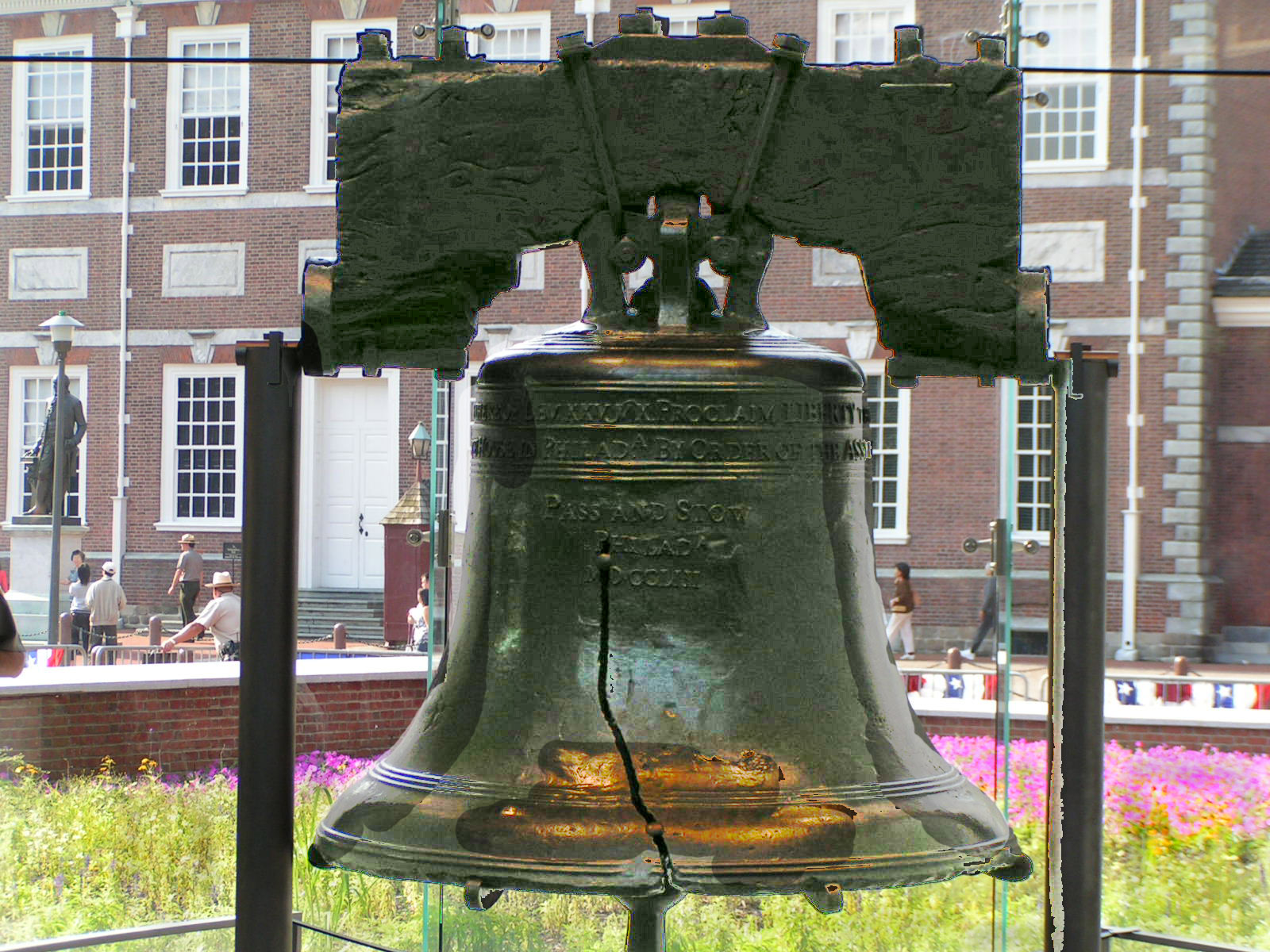
The city is home to many of the US's firsts: It was the birthplace of the US Marine Corps; home to the first library, which was built in 1731; the first hospital, built in 1751; first medical school, founded in 1765; first stock exchange, built in 1790; first zoo, built in 1874; and first business school in 1881. It also boasts over eighty colleges, universities, and trade schools, including the University of Pennsylvania that claims to be the oldest university in the US. It is also home to many national historical sites relating to the founding of the United States, including Independence Hall and the Liberty Bell, along with homes of many well-known figures such as Edgar Allan Poe and Betsy Ross.

Due to its location on the east coast, many immigrant groups came to the city, a number of whom stayed in the town, making it a major industrial center. Textiles, locomotive works, shipbuilding companies, and even the Pennsylvania Railroad were centered there. The first major immigrants were German and Irish, The boom caused by their settling in the city lead to an extension of the city area by another two square miles. Unfortunately, with immigration came a rise in nativism, which is a form of prejudice that suggests that those coming from other countries to live in a new area are less good or important as those who have lived there for a longer period of time. This was used particularly against the Irish immigrants to Philadelphia. At first, the backlash was more against the new Catholics fleeing the Irish Potato Famine, but it quickly encompassed all Irish in the Philadelphia area. The Irish and fugitive slaves were the bottom rung of Philadelphia society for many years, which lead to several riots, including the Lombard Street Riot in 1842 and the Philadelphia Nativist Riot in 1844. Today, Philadelphia has the second largest Irish American population in the US. Its Saint Patrick's Day parade is the second oldest in the country.

An engraved image of one of the riots in Philadelphia
By the time my great-great grandparents arrived in the area, this had died down a little, as more diversified groups had come to settle in the city, but the attitude did not fade for many years. When things became difficult in the early 1900s, Irish were one of the groups who were lashed out against once more. Though my family were Protestants, the fact that they were Irish meant they faced as much backlash as their Catholic neighbors. So finally, sometime in either 1910 or 1911, the family left the country and returned to Ireland, settling in Belfast.

When my great-great grandparents Robert and Elizabeth (Lizzie) Park came to Philadelphia, it was doing very well as a city. The worst of its growing pains after the Civil War had ended, and opportunities were open for all. Unfortunately, the life of an immigrant is never easy, even in an established community. Robert and Lizzie started their family soon after arriving. Unfortunately, their first two children were lost within only a few years. It took them four years to truly get their feet under them, when their son and Robert's namesake was born. The rest of their children were all born healthy, and Robert began to make good money as a carpenter in the area.

Robert & Lizzie Park and friend ca 1917
Unfortunately, by the early 1900s, things were beginning to be rocky in the US again. Robert hoped that Roosevelt becoming president would help things, but it only seemed to increase the nationalistic fervor for some, so the family left and returned to Ireland. The family chose to settle in the Belfast area, as both Robert and Lizzie had been born in Antrim, and I believe still had family in the area. However, this was a tense time in Ireland, too. Even before World War I, sentiment against the English was already bad. Between the Famine and constant pressure from the English, particularly when it came to religion, many were desperate to separate from England. Luckily, one of their girls had married and moved to Canada. The family still felt angry over how they had been treated in America, so they weren't too quick to want to return, but she assured them that Canada was nothing like the US in that respect, so they soon followed her and settled in Vancouver, BC.

Mary Park
It was there that my great-grandmother Mary met and married her husband, Bjarne. The two raised two boys there together and lived mostly happily until his death in 1950. Afterwards, she lived in the house she'd bought with her husband, moving in her sister so she would not be alone. When the two grew too old to be living on their own, her remaining son (the other had died during World War II) moved her down to Washington so she would be nearby. She was never happy about the move, though, hating to live in the country that had treated her family so badly.

Sources
Park Family History
Park Family Tree
Shackamaxon    

Hometown Histories – Vancouver, BC – George Bordewick & Merle Jones


Both of my maternal grandparents were born in Vancouver, BC. Merle Tydfil Jones in 1915, and George Robert Bordewick in 1918.

Vancouver is a seaport on the west coast of mainland British Columbia, Canada. It is set on the mouth of the Frasier River. It currently encompasses a land area of around 114 square kilometres. In 1911, when my grandmother's parents married, the population was 164,020. By 1921, three years after my grandfather was born, it had risen to 232,597 people. By 1920, Vancouver replaced Winnipeg as the leading city in western Canada. As of 2011, the population was more than 2.3 million people. It is the most populous city in Western Canada.

The city is located in the areas that include the ancestral territories of the Squamish, Musqueam, and Tseil-Waututh peoples of the Coast Salish Native Tribes. They had villages in many parts of present-day Vancouver. The area is called S'ólh Téméxw by the First Nations of the area. The Musqueam have been living in the area for 4,000 years. The Squamish and Teleil-Waututh are much newer to the area, but living in the area by the time European mapping took place. The Musqueam and Squamish tribes still live in the area today.

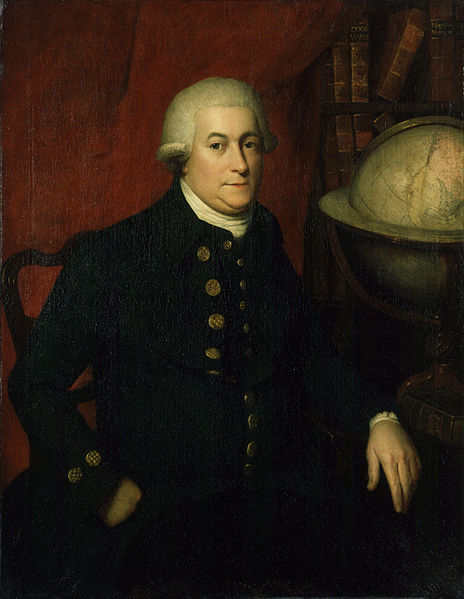
George Vancouver, NPG
The city's name was taken from one of the early explorers to the area, a naval Captain named George Vancouver. He explored the area in 1792. His was the second European scouting party to explore the area. The first was a Spanish Captain by the name Jose Maria Narvaez. Vancouver's party surveyed the Strait of Juan de Fuca, and they were there to map the entire west coast all the way up to Alaska. This work was accomplished in small oar and sail-propelled boats so that they could get into the smaller and shallower inlets without difficulty.

The major river of the area is the Fraser River, named for Simon Fraser, who was the first European to reach the area by land. He travelled to the area along the river now named for him, in 1808. The river became one of the leading routes for those who came into the area for the Frasier Canyon Gold Rush in the 1860s. It was not as successful as the San Francisco or Yukon Gold Rushes, but it brought many Europeans into the area. Because of the Gold Rush, the Province of British Columbia was formed from the unincorporated western area at the time.

The first non-native settlement in the Vancouver area was about 1862, in the Southlands area. The original main settlement, Gastown, was started on the west edge of the Hastings Logging Mill. It started with a tavern created by the millworkers in 1867, which was soon joined by other stores and hotels. Eventually it became a townsite that was named Granville, BI. Shortly after the railroad was started in the area, it was renamed Vancouver, and was incorporated as a City in 1886.

City of Vancouver, 1898
The railroad caused quick growth to the city, and provided easy travel to the eastern provinces of Canada. Immigration from eastern Canada and Europe increased greatly, and also many Chinese immigrants chose to settle there.

Vancouver's port quickly became significant as a link in Britain's global trade network. After the Panama Canal's completion in 1914, it became even more important. The city was then able to compete with the major international trade ports around the world, giving another alternate route to Europe from Asia.

This would have been the year before my Grandmother, Merle was born. Which means she grew up in a flourishing, global city. And it showed in the family she married into. Merle's parents, Daniel and Eliza Jones, had both come to Canada from Wales. Daniel in the nineteen-teens, and Eliza in the late 1800s. George, on the other hand, was born to a much more multi-cultural household. George's father, Bjarne, was from a Norwegian family who had immigrated from first Amsterdam, then settled for a time in Hull, England before immigrating to Vancouver, BC. His mother, Mary, was born in Philadelphia, PA to Irish immigrants. The family moved to Ireland for a year when Mary was in her late teens, then to the Vancouver area in the early nineteen-teens.

In 1919, the Canadian National Railway station was completed. My great grandfather Daniel worked for the Railway, even making a point of asking the railway workers along the way to look after his daughter when she went to join my grandfather while he was training in the east. It was named Pacific Central Station, and provided links down into the US to Seattle and Portland, and via those down to California, and also the most direct route across Canada.

Robert and Lizzie Park with friend, at Mary's wedding, 1911
British Columbia was the second-most populous state for Irish immigrants according to the 2006 Canadian Census. Many came to Canada during the potato famine in the mid-to-late 1800s. My grandfather's mother's family, the Parks, were northern Irish. They left before the country was partitioned. They were protestant, which was true of many northern Irish, and I think coming to the US was their way of trying to escape the growing tensions at home. When things became difficult in Philadelphia for Irish immigrants in the early 1900s, they returned to Ireland. It was only the fact that Vancouver was a growing mecca for many immigrant groups that drew them to the city; along with a letter from one of their children touting the beauty of the area. As citizens of the UK (at least, I believe they were at the time), they were automatically naturalized as Canadian citizens when they arrived. It made the move quite easy, despite being halfway around the world from home.

Gabriel Howells and family ca 1885
Welsh immigrants, on the other hand, are far more populous in Alberta and Saskatchewan, though they are all over Canada. My great-great grandparents, Gabriel and Selina Howells moved to Saskatchewan to live on Gabriel's brother's farm. They moved soon after, settling in Winnipeg, but their children soon began to move west, all settling in BC, and most in and around the city of Vancouver. My great-grandfather, Daniel, came to Canada from Wales as a young man for a trip with friends. Though he meant to come only for a visit, upon meeting my great-grandmother Eliza, he chose to stay, and only returned home to Wales for visits. Again, as citizens of the UK, Daniel, Eliza and her family were all automatically naturalized citizens of Canada.

My Norwegian roots are a little murkier to me, as I am uncertain whether my great-great grandparents, Henrik and Leonharde (Henry and Harde) Bordewick, became Naturalized UK citizens while they were living in Hull, England, or whether they did not become Commonwealth citizens until they settled in Vancouver. I do know that as a fisherman, the West coast provided a great opportunity for Henry, and the community here was very much the home they had been looking for over a number of years, after several stops from their original home in the Lofoten Islands.

McGill University College of British Columbia, the oldest university in BC, changed its name to the University of British Columbia the year my grandmother Merle was born. The population of the campus was greatly diminished by the call to arms during World War I. By the end of the war, almost 700 members of the university had enlisted. In 1920, two years later, the university had only three faculties: Arts, Applied Science, and Agriculture, and only awarded the degrees of Bachelor of Arts, Bachelor of Applied Science, or Bachelor of Science in Agriculture. At that time, there were 576 male students and 386 female students, with only 64 academic staff, only six of which were women. In 1922, the student body had risen to the number of more than twelve hundred, and they marched to push the local government into expanding the campus. Their cause was successful, and the campus was moved to Point Grey, with the first lectures there starting in 1925. Unfortunately, the depression had a bad effect on the campus, and their funds were cut drastically, to the point where many staff posts remained vacant, and several of the faculty lost their jobs. In addition, most graduate courses were dropped. Things were beginning to improve just as World War II broke out. At the close of the war, the numbers in the university increased dramatically, growing almost exponentially, and causing great expansion of both classes and campus.

In 1918, the year my grandfather George was born, the Vancouver General strike happened. It was the first general strike in Canadian history, protesting the killing of a draft dodger named Albert Goodwin. He had called for a general strike in the event any worker was drafted against their will. In response, a group of returned soldiers stormed the offices of the Vancouver Trades and Labour Council. They attacked the Council secretary, Victor Midgely and forced him and another man to kiss the union Jack. One of the women in the offices also received minor injuries when she prevented them from throwing Midgely from the window. The city's reaction against the strike was strong, and the leaders resigned due to the backlash. However, they were nearly all re-elected shortly after, showing that within the union their support had been strong, and not influenced by outside forces. Vancouver was the only city in BC that took part in the strike. Many other strikes also took place in the city that year. It was an important point in the Canadian labour revolt that peaked with the Winnipeg General strike the next year. Another Vancouver strike in sympathy with Winnipeg became the longest general strike in Canadian History.

George and Merle on their wedding day ca 1939 with his grandmothers Harde and Lizzie
This was the liberal, growing, thriving city my grandparents grew up in. Both grew up in protestant households, attending regular services on Sunday, and both got involved in youth groups in their churches. It was this that led to their meeting as teens, and the two quickly became an item, dating until the late 1930s, when George joined the Canadian Armed Forces. George asked Merle to marry him, and she said yes. The two were married at her parents' house in 1939, and then Merle and George headed for the east where George was trained. She stayed with him there until he was sent to the front, and then returned home, where she gave birth to the first of their four children.

He returned from the war and settled into civilian life, becoming an accountant. He and Merle had four children there together before George began to search for a new job in the late 50s. He eventually found the family a new home in Bellevue, Washington and they moved in 1960. However, even after their move, the family visited their fair home city quite often, and still do even today.

Sources:
Bordewick Family History

About this blog

This blog is maintained by two sisters who have had a life long interest in geneology.
Mika writes here mostly about our family (Hansen, Hillinger, Bordewick, Park, etc), and her search for more information.
Shannon mostly uses this space as a place to make the many stories written about and by her husband's family (Holly, Walker, Walpole, etc) available to the rest of the family, present and future.

Our blog is named Oh Spusch! mostly because Shannon is bad at naming things. The first post I put up includes a story about the time Walker's great grandfather took his whole family out to see a play and the littlest kept saying "Oh! Spusch!" No one ever figured out what she meant by that.