Showing posts with label Robert James Park. Show all posts

Park Placeline

Just a year ago, this post would have been two generations shorter, as the g-g-g grandfather I had in this line was wrong. And I had literally nothing for him and his wife but names, and only a surname in this case. Now thanks to my cousin Kate, who kept digging and pushing until she found more information and got us a whole other generation back in the Park line. So thank you, Kate, for helping to expand our family tree. This family line was why I started my search. And aside from the above, I've made very little headway with them, so having that expansion was quite exciting. Who knows what we'll find now that we have more names.

As always, bold are important places for birth, marriage, and death records, and italics are other locations they lived in for at least a year.

1. Mary (May) Dunlop Park

A. Des Moines, Washington. When Granny grew too old to live on her own, my grandfather found a place for her here in Washington at a Masonic nursing home. My grandfather was a Mason, and used his connections to get her a very comfortable and pretty place to live. Despite that, she wasn't happy to be here. She remembered her youth in the US poorly, and hated how her father had been treated at that time. If she'd had her way, she never would have lived in the US again. But we were glad to have her close by, where we could see her, and I have fond memories of visiting her here several times before she passed away.

B. Vancouver, BC, Canada. My great-grandmother lived the majority of her life here in Vancouver. She moved here in her twenties, and lived here until late in her life. Here she met her husband, Bjarne, and here she had her two boys. I would venture to say it was the place she felt was her home.

C. Belfast, Ireland. At the time, it was before Irish independence, so I will call it just Ireland. For a short time before the Parks moved to Canada, they lived in Belfast.

D. Philadelphia, Pennsylvania. This is where Mary and all her siblings were born. Their parents came here from northern Ireland in 1883, and only left when it became too difficult to be immigrant Irish in the Eastern US, when they returned home to Ireland.

2. Robert James Park

A. Vancouver, BC, Canada. This is where my great-great grandparents settled finally with all their children, and lived until they passed away, which for Robert was almost twenty years, a good, long time. 

B. Belfast, Ireland. After no longer wanting to be in the US, the Parks returned to Belfast before moving again to Canada. The only reason I have this confirmed is because they were there long enough to be in the Irish Census for 1911.

C. Philadelphia, Pennsylvania. After Robert and Lizzie married, they emigrated to the US, settling in Philadelphia. According to the work my cousin Kate has done, it seems they had at least one if not several family members and friends from Ireland in their community. Robert made a living as a cabinet maker. It was only when the push against Irish immigrants began in the US in the 19-teens that they left and returned to Ireland.

D. Belfast, Ireland. I do not know at all how long Robert lived in Belfast, only that this is where he was when he married Lizzie. And I know this is where they left for America from.

E. Ballymena, Ireland. Robert was born in Ballymena, which is also in Northern Ireland. I know almost nothing about his life there, though he had at least two sisters and two older half brothers.

3. David Park Esquire

A. Ballymena, Ireland. I know almost nothing about David or his father. They are very new in my tree thanks to my cousin. I only know that David married twice, and had at least five kids between those wives. Nearly all the locations I currently have for him are Ballymena, so I presume he lived most if not all his life in or near the city of Ballymena.

4. John Park

A. Antrim, Ireland. I know even less about John than I do about David. I have four sons for him, but no spouse, and all his locations are in Antrim. 

*

We do have one more generation back, but no specific locations attached to him, so I will not include him here at this time. Six locations for this one. Very little information once I get back to Ballymena, unfortunately, but at least that is beginning to grow thanks to all the digging my cousin is doing.

52 Ancestors - Foundations - Robert James Park

So I've heard of the 52 Ancestors in 52 Weeks challenge before, but never joined in until this year. In the past, I found out halfway through the year, or already had too much else going on here. This year, I decided that since I was almost entirely silent here the last year or two, that it would be a good way of getting something on this blog. If you're interested, you can join the challenge here.

The first week's prompt is Foundations. I've been pondering this one since I got the prompt, trying to figure out what this would be about, since it is so very general. I did think about the person who made my maternal grandfather's family line so strong, but I've written about him a lot, so I wanted to do something different. I just wasn't sure what that might be. So this morning, I glanced through some of the other entries that have been posted to Twitter, and realized just what I wanted to do. The foundation of why I got into Genealogy in the first place.

I remember tales of my family tree as a background of my life since I was small. I remember my grandmother and her sister digging into their own lineage when I was young. My father even made hand-calligraphed family trees for each of my great grandmothers before their deaths in the early 80s. But it wasn't until 1991 when I lost my grandfather that I felt the need to actively dig into my family tree.

My grandfather's mother, Mary Park was Irish American. She was born in Philadelphia, Pennsylvania along with all of her brothers and sisters, but their parents came from what is now Northern Ireland. Upon my grandfather's death, I realized I knew almost nothing about that branch, and that there were almost no members of that family left. It set me on a path to learn everything I could about that side of my family tree. Eventually, that became all branches of my ancestry, but that side has always held a deep fascination for me.

At the beginning of my search, all I knew was what I could glean from my mother, her siblings, and their mother. The nice thing was that they'd spent a lot of time with Granny before her death in the early 80s, since Grandpa was her only surviving child. The bad thing was that they knew nothing before Granny's parents. So for a long while, all I had was the name of my great-grandmother, her siblings, and their parents. And nothing before they had arrived in America.

Until I finally got my hands on their death certificates. Which helped with my great-great grandmother,  Elizabeth Park nee Curran, but not my great-great grandfather, Robert James Park. Her parents were listed as Thomas Curran and Jane Blair, which led me to several more records, and a more firm knowledge that that branch, at least, was from Antrim in Northern Ireland. His parents, unfortunately, were far less helpful as listed on his death certificate: John Park and Dunlop. No first name, just Dunlop.

Now, I had often wondered if perhaps my great grandmother might have been named for her grandmother, as that is a very common thing to do, and her middle name was Dunlop, so that part, at least, was confirmed. But I had no way of proving her grandmother's first name, as I could find it listed nowhere else.

Until last year, when a cousin got in touch with me. (Hi Kate! :D) Her grandmother was my great-grandmother's youngest sibling, and so we had a lot in common trying to untangle who Robert Park was, and who his parents were. Some of the records I found confirmed a birthplace for him of Ballymena, Ireland, now in Northern Ireland. But none of the records either of us could find listed anything quite right to prove his parents. So she began to check with her DNA matches and compared them to possible records, and ended up talking to someone at Family Search who helped her confirm Robert's parents. Not John, as was listed on the death certificate I found, but David Park. And the wife listed? Mary Dunlop. So now I know for certain, my great-grandmother was named for her grandmother. The Dunlop middle name was also passed to two of her younger siblings. 

So as of now, my ancestral line on this side of my family goes back solidly another two generations. Starting from Robert, his parents were David Park Esquire and his wife Mary Dunlop. David's father was John Park. We haven't yet been able to determine his mother's name. Mary's parents as my cousin found them were Robert Dunlop and Mary Baird. And that's as far back as I currently have. Not bad, given that I had one and a half people before, and one was wrong.

So my lessons to anyone interested? Even if it takes 30 years, keep looking. New records are uncovered or uploaded to the net every day. You never know what you might find. Talk to family. Because they see things different than you, or may have information you don't have. And get those DNA tests, because that was a lot of what gave my cousin the hints that helped her focus in on names.

That's all for now. Good luck in your searches!

Hometown Histories – Philadelphia, Pennsylvania, USA – Mary Park


My great grandmother Mary Park was born in 1891 in Philadelphia, Pennsylvania. Aside from Frankfurt, it is likely the most well-known birthplace in my family history. Her parents, Elizabeth and Robert Park came to the US in 1883. They had nine children while living in Philadelphia; seven of those children survived to adulthood.


Philadelphia is the largest city in Pennsylvania, and has the fifth largest population in the US. It was founded in 1682 by William Penn, and was created to serve as the capitol of Pennsylvania Colony. It currently covers an area of just over 141 and a half square miles. In 1890, the year before my great-grandmother was born the population had just passed the million mark. In 2014, it had reached 1.5 million, though at its height in 1950, it was over two million.

A panting supposedly showing William Penn and the Lenape signing a treaty
Before Europeans arrived in the area, it was the home to the Lenape (more commonly known as the Delaware) Indians. They had a meeting place which is within the boundaries of the current city that was known as Shackamaxon, from the Lenape term Sakimauchheen, meaning "to make a chief or king place." It was where the tribe crowned their sakima (their term for chief) and kitakima (clan chief). Some suggest it means "the place of eels," as it was an important summer fishing spot for the natives. Accounts say that William Penn signed a treaty with the Lenape in 1682 for the land, though no absolute proof has ever been provided. The Lenape were soon pushed out of their homelands, heading north and west as the Europeans pushed inland. Both the US and Canada have formally recognized the tribe. The tribe split into groups, and are now settled in Oklahoma, Wisconsin, and southwest Ontario. New Jersey has also recognized two Lenape tribes within their boundaries, and Delaware has recognized one as well. There are other Lenape groups throughout the northeast and midwest, though they have less recognition than the others.

Philadelphia was instrumental in the American Revolution as a meeting place for the Founding Fathers of the US, and served as one of the nation's capitals during the Revolutionary war. The city hosted the First Continental Congress, which was an important step in the War, and the Second Continental Congress, at which the Declaration of Independence was signed. It also hosted the Constitutional convention, which was a vital step to founding the US government as it now exists. After the war was over, it also became the fledgling country's temporary capital while Washington DC was under construction. It served as the Capital from 1790 to 1800.

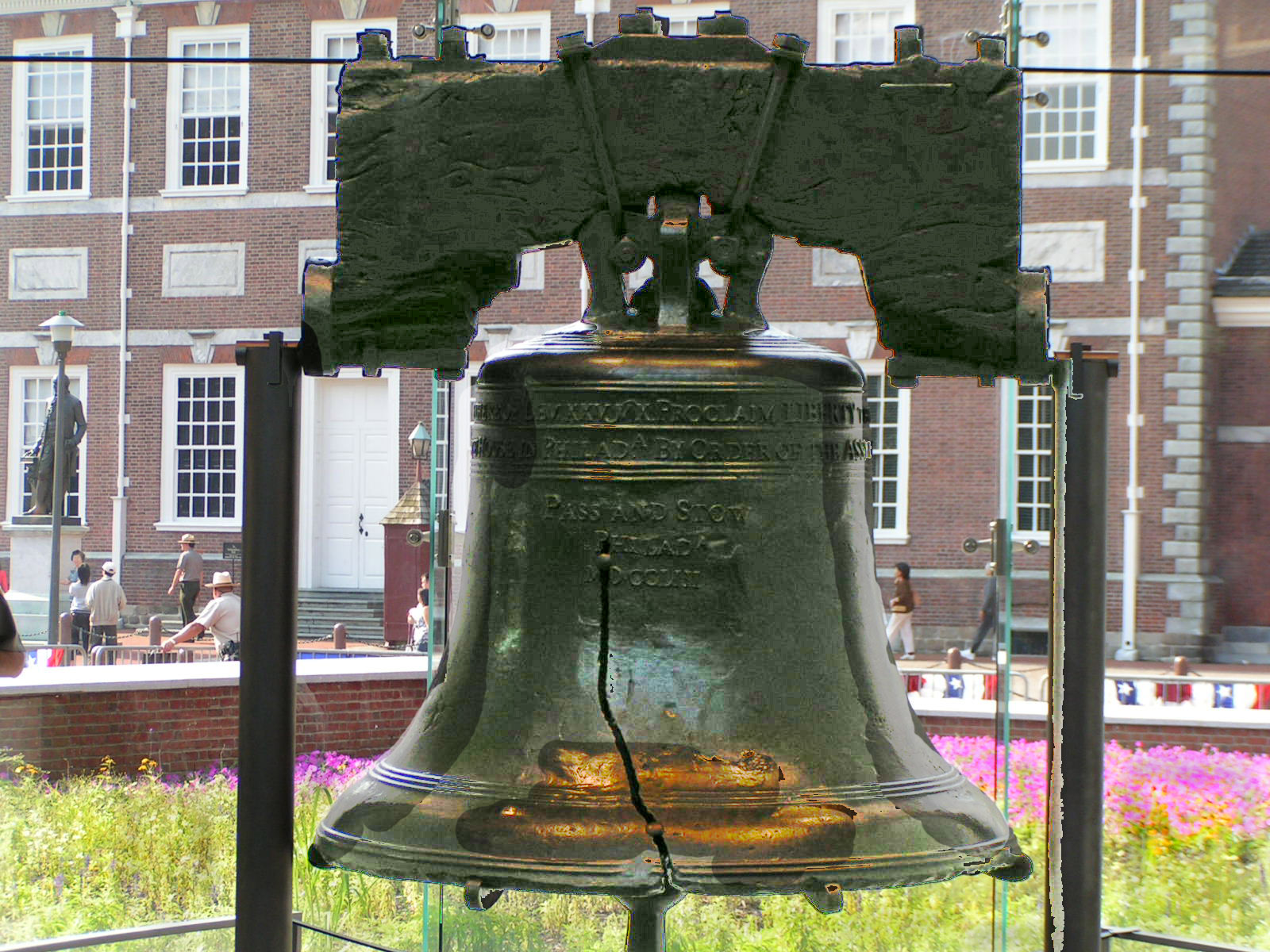
The city is home to many of the US's firsts: It was the birthplace of the US Marine Corps; home to the first library, which was built in 1731; the first hospital, built in 1751; first medical school, founded in 1765; first stock exchange, built in 1790; first zoo, built in 1874; and first business school in 1881. It also boasts over eighty colleges, universities, and trade schools, including the University of Pennsylvania that claims to be the oldest university in the US. It is also home to many national historical sites relating to the founding of the United States, including Independence Hall and the Liberty Bell, along with homes of many well-known figures such as Edgar Allan Poe and Betsy Ross.

Due to its location on the east coast, many immigrant groups came to the city, a number of whom stayed in the town, making it a major industrial center. Textiles, locomotive works, shipbuilding companies, and even the Pennsylvania Railroad were centered there. The first major immigrants were German and Irish, The boom caused by their settling in the city lead to an extension of the city area by another two square miles. Unfortunately, with immigration came a rise in nativism, which is a form of prejudice that suggests that those coming from other countries to live in a new area are less good or important as those who have lived there for a longer period of time. This was used particularly against the Irish immigrants to Philadelphia. At first, the backlash was more against the new Catholics fleeing the Irish Potato Famine, but it quickly encompassed all Irish in the Philadelphia area. The Irish and fugitive slaves were the bottom rung of Philadelphia society for many years, which lead to several riots, including the Lombard Street Riot in 1842 and the Philadelphia Nativist Riot in 1844. Today, Philadelphia has the second largest Irish American population in the US. Its Saint Patrick's Day parade is the second oldest in the country.

An engraved image of one of the riots in Philadelphia
By the time my great-great grandparents arrived in the area, this had died down a little, as more diversified groups had come to settle in the city, but the attitude did not fade for many years. When things became difficult in the early 1900s, Irish were one of the groups who were lashed out against once more. Though my family were Protestants, the fact that they were Irish meant they faced as much backlash as their Catholic neighbors. So finally, sometime in either 1910 or 1911, the family left the country and returned to Ireland, settling in Belfast.

When my great-great grandparents Robert and Elizabeth (Lizzie) Park came to Philadelphia, it was doing very well as a city. The worst of its growing pains after the Civil War had ended, and opportunities were open for all. Unfortunately, the life of an immigrant is never easy, even in an established community. Robert and Lizzie started their family soon after arriving. Unfortunately, their first two children were lost within only a few years. It took them four years to truly get their feet under them, when their son and Robert's namesake was born. The rest of their children were all born healthy, and Robert began to make good money as a carpenter in the area.

Robert & Lizzie Park and friend ca 1917
Unfortunately, by the early 1900s, things were beginning to be rocky in the US again. Robert hoped that Roosevelt becoming president would help things, but it only seemed to increase the nationalistic fervor for some, so the family left and returned to Ireland. The family chose to settle in the Belfast area, as both Robert and Lizzie had been born in Antrim, and I believe still had family in the area. However, this was a tense time in Ireland, too. Even before World War I, sentiment against the English was already bad. Between the Famine and constant pressure from the English, particularly when it came to religion, many were desperate to separate from England. Luckily, one of their girls had married and moved to Canada. The family still felt angry over how they had been treated in America, so they weren't too quick to want to return, but she assured them that Canada was nothing like the US in that respect, so they soon followed her and settled in Vancouver, BC.

Mary Park
It was there that my great-grandmother Mary met and married her husband, Bjarne. The two raised two boys there together and lived mostly happily until his death in 1950. Afterwards, she lived in the house she'd bought with her husband, moving in her sister so she would not be alone. When the two grew too old to be living on their own, her remaining son (the other had died during World War II) moved her down to Washington so she would be nearby. She was never happy about the move, though, hating to live in the country that had treated her family so badly.

Sources
Park Family History
Park Family Tree
Shackamaxon    

Surname Saturday 2.0: The Parks

The Park Family

For me, the Park family was the initial reason I got into my genealogy. After my grandfather died, I realized there were few people left in his generation or before for his family, so while I had the Bordewicks traced out on paper, I had nothing for his mother's side. I had to start by hand, asking my mom and her siblings and my grandmother who the Park children were, and who they married, but even then, I only got two generations of information, and it was a bit shaky at best, but it was a start. At a family gathering, I managed to hook up with a cousin from my great-grandmother's mother's side of the family, and she sketched out a few more links for me, but for a long time, I had little to nothing about this side. Only in the last few years have I finally learned my great-great grandparents' parents names and where they were born.

The Park line is Irish. I've known that for a long time. I can't even remember when I first learned it, so I must have been small. It was only after I started to research this line that I began to hear that they weren't Irish, but Northern Irish, with pretty much everything that entails for someone who lives in the US.

My great-great grandfather, Robert Park, was born to John Park and his wife, a woman who to this day, I still only have the surname of, Dunlop. I know he was born in 1852, but beyond that and their names, I have little else on his family before he met his wife Elizabeth Curran and came to the US in the 1880s. I suspect his mother's name may be Mary, as they named my great-grandmother Mary Dunlop Park, but I have no proof of that, so that is only a speculation at this time.

Robert and Elizabeth came to the United States about 1883 and settled in Philadelphia, where Robert worked as a cabinet maker and woodworker. The couple had nine children there between arriving and when they left in the early 1900s, two of which died in infancy.

In the early 1900s, things became difficult in the US for immigrants, and so Robert decided to move his family back to Northern Ireland. By 1911, they were settled in Belfast, and are listed in the Irish Census of the time. The children were growing older, and several of them began to find their own ways at the time. One of the older daughters married, and she and her husband moved to Canada, settling there. When she wrote back glowing reports of the country, the family moved again, this time settling in Vancouver BC, where my great-great grandparents lived until their deaths.

My great-grandmother met her husband after the family settled in Vancouver. His family were immigrants from Norway (see the Bordewick family story), and had also recently arrived. The two married in 1917, and had two boys, my grandfather, George Robert, and his younger brother, Henry Norman. Henry died in the war, and my great-grandfather died in 1950, leaving my grandmother on her own. Her younger sister Margie moved in with her, and the two lived together until the late 70s or very early 80s when my grandfather had her moved down to a Masonic nursing home in Washington so he could be closer to her so they could visit more frequently once it was difficult for her to get around.

The Park line is as follows, for those interested:

* John Park and his wife (Miss Dunlop) married sometime around/before 1852, when their son was born. As of yet, I have only one child for them, my great-great grandfather.

* Robert Park was born in 1852, and married Elizabeth Curran sometime in 1883. The two then (or so I believe) emigrated from Northern Ireland (at the time, just Ireland, as Northern Ireland didn't come into existence until after the Great War) about that time, and settled in Philadelphia, Pennsylvania in the USA. There they had 9 children, then moved back with them to Ireland in the early 1900s after the youngest was born. They moved to Canada in the mid 19-teens, and both died there.

* Their children:
o The two eldest, who died in early childhood or infancy, whose names I can only guess at this time, though I have found a record for a Jennie Curran Park with the right parents whom I suspect may have been named for Elizabeth's mother. The other child may have been a boy, but at this time, I cannot be certain.
o Robert Curran Park, who died in 1912.
o Elizabeth "Bessie" Park, who married and settled in Vancouver, living there until her death in 1966.
o Mary "May" Dunlop Park, my great-grandmother, who lived to the grand old age of 91, and who I still remember fondly to this day. She married Bjarne Bordewick, and they had two sons; my grandfather had four children, and his daughter had two, and she even has one great-great granddaughter and one great-great grandson today.
o Rhoda Park, who also lived a good long life. Married and lived to 1982 as well. I have vague memories of meeting her as a child, though she was not as constant a visitor as their sister Marge.
o Margaret "Marge" Park, who lived with her sister for many years after Bjarne's death, and lived to the amazing age of 106.
o George Dunlop Park, who managed to outlive my grandfather who was named for him, married in Vancouver, and lived until 1993.
o And the baby of the family, Florence "Florrie" Park, who was the only one of the siblings to leave the British Columbia area, and settled in Ontario after her marriage. She and her husband had four sons, and they are the only cousins my grandfather had, though they were closer in age to his son than himself. She has descendants in both Ontario and BC still today. She died in 2001.

What I don't know:

* I believe that this line is what we in the US call Scots-Irish. Park and Dunlop (especially Dunlop) are very Scottish names, and many of those expelled from their land in Scotland moved to Northern Ireland after. I would love to have this confirmed.

* I would love to know more about John Park, and where he was born, lived, and died. I would love to know how many children he had as well, as an Irish family with only one child seems a tad unbelievable.

* I want to know where Robert and Elizabeth married. I assume that was in Ireland, but I could be wrong. I also want to confirm the lost child I found, and learn the name of the other child they lost as well.

* I would love to know about any of the boats they traveled on. I don't know when or where they may have departed from (though I assume the one back to the UK was from Philadelphia…), but it would be great to find out.

Other information about this branch of the family:
Brick Wall Posts -
● Brickwall Ancestors
● Brick Wall Update #2
● Brick Wall Update
● Brick Walls: a Different Listing
● Brick Wall Update
● Brick Wall Update 2012
Old Surname Posts –
● Park
Where We're From Posts –
● Where We're From – United States
● Where We're From – Canada
● Where We're From – Ireland
● Where We're From – The Unknown
Other -
● The Bordewick Family
● Four Generations
● New Discoveries
● Women's History Month – Week 2
● Heirloom Quilt

Advent Calendar: Robert James Park

Robert James Park

Born 1852, died 1930, aged 78
Lived in: Ireland (uncertain of location or locations); Philadelphia, Pennsylvania, US, Ireland (again, Belfast most likely); Vancouver, Canada
Married: Elizabeth Curran
Children:
(two unnamed children who died in early childhood)
Robert Park
Elizabeth Park
Mary Dunlop Park
Rhoda Park
Margaret Park
George Park
Florence Park

Robert was born in a turbulent time in Irish history. Because of this, we know almost nothing about his life before he came to the United States. We do know he was born to a man named John Park and his wife, whose surname was Dunlop. Robert and his wife married before coming to the states, I believe, possibly sometime around 1883. The couple moved to the US because of the Irish Potato Famine, and settled in Philadelphia, where all their children were born. Of their nine children, seven survived childhood, and six to adulthood, though only two went on to have families of their own. When Teddy Roosevelt came to power, the Republicans did everything in their power to make life difficult, and so the family chose to return to Ireland. Eventually, one of their daughters made her way to Vancouver BC, and sent back such glowing reports of the city and country that the rest of the family soon followed, most of them settling in and around the Vancouver BC area, where Robert died in 1930.

About this blog

This blog is maintained by two sisters who have had a life long interest in geneology.
Mika writes here mostly about our family (Hansen, Hillinger, Bordewick, Park, etc), and her search for more information.
Shannon mostly uses this space as a place to make the many stories written about and by her husband's family (Holly, Walker, Walpole, etc) available to the rest of the family, present and future.

Our blog is named Oh Spusch! mostly because Shannon is bad at naming things. The first post I put up includes a story about the time Walker's great grandfather took his whole family out to see a play and the littlest kept saying "Oh! Spusch!" No one ever figured out what she meant by that.